

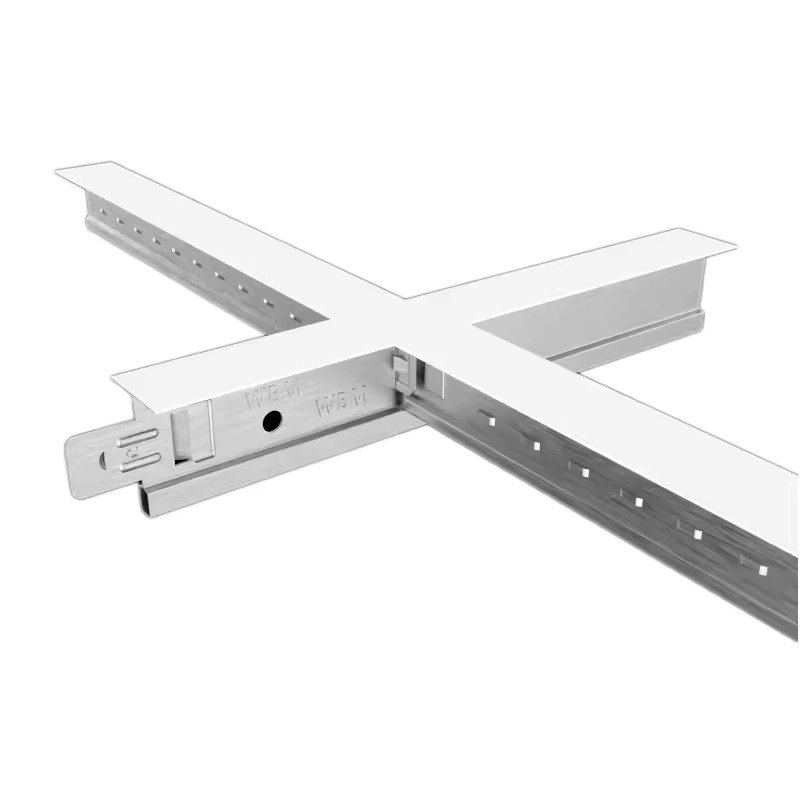
A T Grid ceiling system, also known as a suspended ceiling or drop ceiling system. It is one of the most widely used ceiling solutions in commercial, institutional, and industrial buildings. T Grid ceiling consists of a metal framework suspended from the structural ceiling, creating a grid pattern that supports ceiling tiles or panels. T Grid systems offer a practical and aesthetically pleasing way to enhance interiors while providing easy access to electrical, plumbing, and HVAC services located above the ceiling.
Understanding the T Grid Ceiling System
The name “T Grid” comes from the T-shaped metal sections that form the framework. These metal profiles are suspended from the main structure using hanger wires and connected to create a modular grid. Ceiling panels are then placed within the grid openings, resulting in a clean and uniform ceiling appearance.
T Grid systems are available in different sizes, profiles, and load-bearing capacities to accommodate various ceiling panel types and project requirements.
Main Components of a T Grid Ceiling System
- Main Runners- Main runners are the primary structural members that run across the ceiling area. They provide the main support for the entire grid system.
- Cross Tees- Cross tees connect to the main runners and create the modular grid pattern. They help distribute the load evenly across the ceiling structure.
- Hanger Wires- Hanger wires suspend the grid system from the structural ceiling and ensure stability and alignment.
- Wall Angles- Wall angles are installed along the perimeter walls to support the edges of the ceiling grid.
- Ceiling Tiles or Panels- The visible part of the ceiling consists of tiles or panels made from materials such as mineral fiber, gypsum, metal, or acoustic materials. Also read about open cell ceiling design
Benefits of a T Grid Ceiling System
Easy Access to Building Services
One of the biggest advantages of a T Grid ceiling is its accessibility. Individual ceiling tiles can be removed without disturbing the entire ceiling, allowing quick access to wiring, ducts, pipes, and maintenance areas.
Improved Acoustic Performance
Many T Grid ceiling systems use acoustic ceiling tiles that help reduce noise levels and improve sound quality in offices, schools, hospitals, and conference rooms.
Cost-Effective Installation
Compared to many alternative ceiling solutions, T Grid systems are relatively quick and economical to install, making them a popular choice for large-scale projects.
Design Flexibility
Available in a wide range of tile designs, textures, colors, and materials, T Grid ceilings can complement various architectural styles and interior themes.
Enhanced Aesthetics
The system conceals structural elements, wiring, and mechanical services, creating a neat and professional appearance.
Types of T Grid Ceiling Systems
- Exposed Grid System- In this design, the metal grid remains visible after installation, creating a clean and functional appearance.
- Concealed Grid System- The grid is hidden behind specially designed ceiling panels, offering a seamless and more sophisticated look.
- Fire-Rated Grid Systems- These systems are designed to meet specific fire safety requirements and are commonly used in commercial and public buildings.
Conclusion
A T Grid ceiling system is a versatile, cost-effective, and highly functional ceiling solution that combines aesthetics with practicality. Its ability to support different ceiling panels, improve acoustics, conceal building services, and simplify maintenance makes it a preferred choice across a wide range of commercial and institutional environments. Whether you’re planning a new building or upgrading an existing space, a T Grid ceiling system offers a reliable and efficient ceiling solution that meets modern architectural and operational needs.Bottom of Form
