

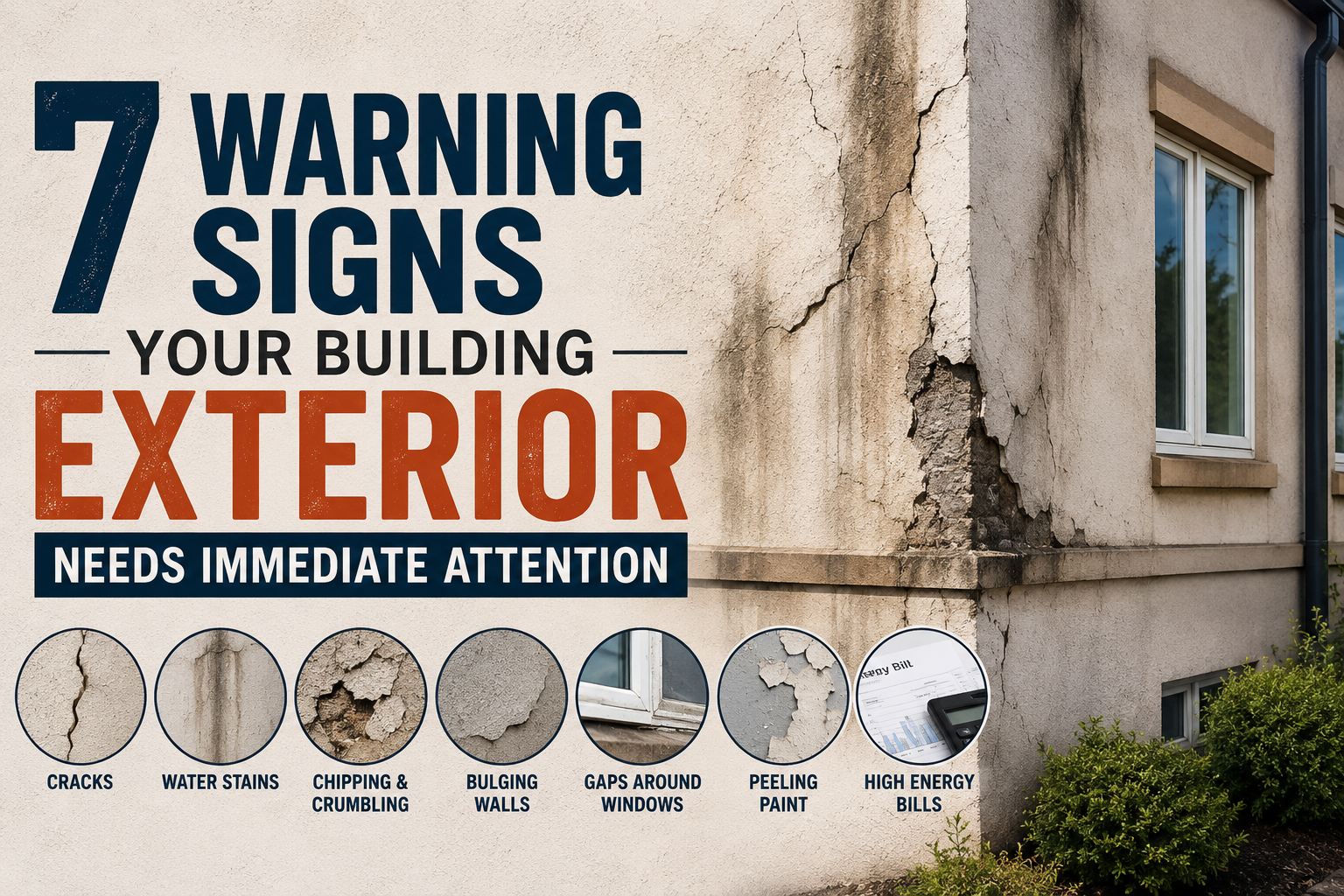
Most property owners don’t spend much time thinking about their building’s exterior until they notice something that doesn’t look right. A crack appears on a wall, paint starts peeling, or a section of stucco begins to break apart. Unfortunately, by the time these issues become obvious, the damage has often been developing for quite some time.
As someone who has worked with stucco and exterior repairs for years, I’ve seen how small problems can quickly turn into costly repairs when they’re ignored. The good news is that buildings usually give plenty of warning signs before serious damage occurs. Knowing what to look for can help you address issues early and protect your investment.
Whether you own a home, condominium, apartment building, or commercial property, here are seven warning signs that your building exterior needs immediate attention.
1. Cracks That Continue to Grow
Small hairline cracks can sometimes appear naturally as a building ages. Materials expand during warm weather and contract when temperatures drop, which can create minor surface cracks over time.
The concern begins when cracks continue to grow or when new cracks keep appearing in the same area.
Take a walk around your property and pay attention to cracks near windows, doors, corners, balconies, and rooflines. If a crack becomes wider, longer, or more noticeable each season, it may indicate that more than normal wear and tear is occurring.
Many property owners simply paint over cracks because they appear cosmetic. However, cracks can allow water to enter behind the surface. Once moisture gets inside, the problem often becomes much larger than the visible crack itself.
The earlier a growing crack is addressed, the easier it is to determine the cause and prevent additional damage.
2. Water Stains on Exterior Walls
Water is one of the biggest threats to any building exterior.
If you notice dark streaks, discoloration, green patches, or areas that always seem damp, moisture may be finding its way into places where it shouldn’t be.
Sometimes these stains develop slowly, making them easy to overlook. Property owners often assume they’re simply caused by dirt or aging materials. In reality, recurring stains can be a sign that water is entering through cracks, gaps, damaged sealants, or other vulnerable areas.
A good rule of thumb is simple: if a stain keeps returning after cleaning, it’s worth investigating further.
Water problems rarely stay in one place. Once moisture begins moving behind an exterior wall, it can affect surrounding materials and create more extensive repairs later.
3. Stucco Is Chipping or Falling Off
Stucco is designed to be durable and long-lasting, but like any exterior material, it can eventually show signs of wear.
One of the most obvious warning signs is when pieces of stucco begin cracking, chipping, flaking, or falling away from the wall.
At first, the damaged area may seem small enough to ignore. However, surface damage often indicates that moisture, weather exposure, or aging materials have already started affecting the area.
I’ve seen many situations where a property owner waited because only a small section looked damaged. Months later, what could have been a straightforward repair became a much larger restoration project.
If you notice loose or deteriorating stucco, it’s usually best to have it evaluated sooner rather than later. Homeowners searching for Stucco Repair Toronto services often discover that early intervention helps prevent more widespread exterior damage.
4. Walls That Look Uneven or Bulge Outward
Your exterior walls should appear relatively straight and consistent.
If sections of the wall appear swollen, bowed, uneven, or wavy, it’s often a sign that something is happening beneath the surface.
Moisture is frequently one of the main causes. When water becomes trapped behind exterior materials, it can gradually affect the wall underneath and cause visible changes on the surface.
One simple way to spot this issue is to look along the wall from an angle during daylight. Uneven areas often become easier to notice when sunlight casts shadows across the surface.
Many people assume this is purely an appearance issue, but visible changes in the wall should always be taken seriously. The longer the condition remains unaddressed, the more difficult repairs can become.
5. Soft or Hollow Areas on the Wall
This is a warning sign that many property owners aren’t aware of.
A healthy stucco wall should feel solid. If certain sections sound hollow when lightly tapped or feel different from surrounding areas, there may be an issue developing behind the surface.
In some cases, moisture may have affected the materials underneath. In others, the stucco may be beginning to separate from the wall.
You don’t need special equipment to notice this problem. During a routine inspection, gently tapping suspicious areas can sometimes reveal sections that sound noticeably different.
While a hollow-sounding area doesn’t always mean major damage exists, it’s a sign worth investigating before the affected section grows larger.
6. Gaps Around Windows and Doors
Windows and doors are common places for exterior problems to develop.
Over time, the materials used to seal these openings can wear out due to weather, sunlight, and seasonal temperature changes.
Look closely for:
- Cracked sealant
- Small gaps around frames
- Separation between stucco and windows
- Water stains nearby
- Drafts coming indoors
Even a small opening can allow water to enter behind the wall. Because these areas are constantly exposed to rain and temperature changes, minor gaps can become larger problems if left unattended.
Routine inspections around windows and doors can help catch issues before they spread into surrounding areas.
7. Higher Energy Bills Than Usual
Not every warning sign appears on the outside of the building.
Sometimes property owners first notice a problem when their heating or cooling costs begin increasing unexpectedly.
If your building isn’t holding indoor temperatures as efficiently as it once did, the exterior may be contributing to the issue.
You may notice:
- Drafts near windows
- Rooms that feel colder in winter
- Uneven temperatures throughout the building
- Increased heating and cooling costs
Exterior damage, moisture intrusion, and aging materials can all affect how well a building performs.
Property owners experiencing these issues often discover that exterior repairs are part of the solution. For example, homeowners looking into Stucco Repair Oakville projects sometimes find that repairing damaged exterior areas helps improve both comfort and energy efficiency.
Why Early Action Matters
One thing I’ve learned throughout the years is that exterior problems almost never get better on their own.
A small crack can become a larger crack.
A minor moisture issue can spread.
A simple repair can turn into a major project if it’s ignored long enough.
The most cost-effective approach is usually identifying problems early and addressing them before additional damage occurs.
Regular inspections don’t need to be complicated. Simply walking around your property a few times each year and paying attention to visible changes can help you spot issues before they become serious.
Need Professional Advice?
Exterior problems rarely improve on their own. If you’re seeing cracks, loose stucco, water stains, or other signs mentioned in this article, it’s worth having them looked at sooner rather than later. We regularly assist homeowners and property managers across Toronto, Mississauga, Oakville, and nearby communities with exterior repair and maintenance concerns. Even if you’re not sure whether the issue is serious, a professional assessment can provide peace of mind and help you understand your options.
Final Thoughts
Your building’s exterior protects everything inside from weather, moisture, and daily wear. Over time, even well-maintained properties can develop issues that require attention.
Growing cracks, water stains, damaged stucco, uneven walls, hollow areas, gaps around windows, and rising energy bills are all signs that shouldn’t be ignored.
By recognizing these warning signs early and taking action when needed, property owners can avoid larger repairs, extend the life of their exterior surfaces, and keep their buildings looking their best for years to come.
