

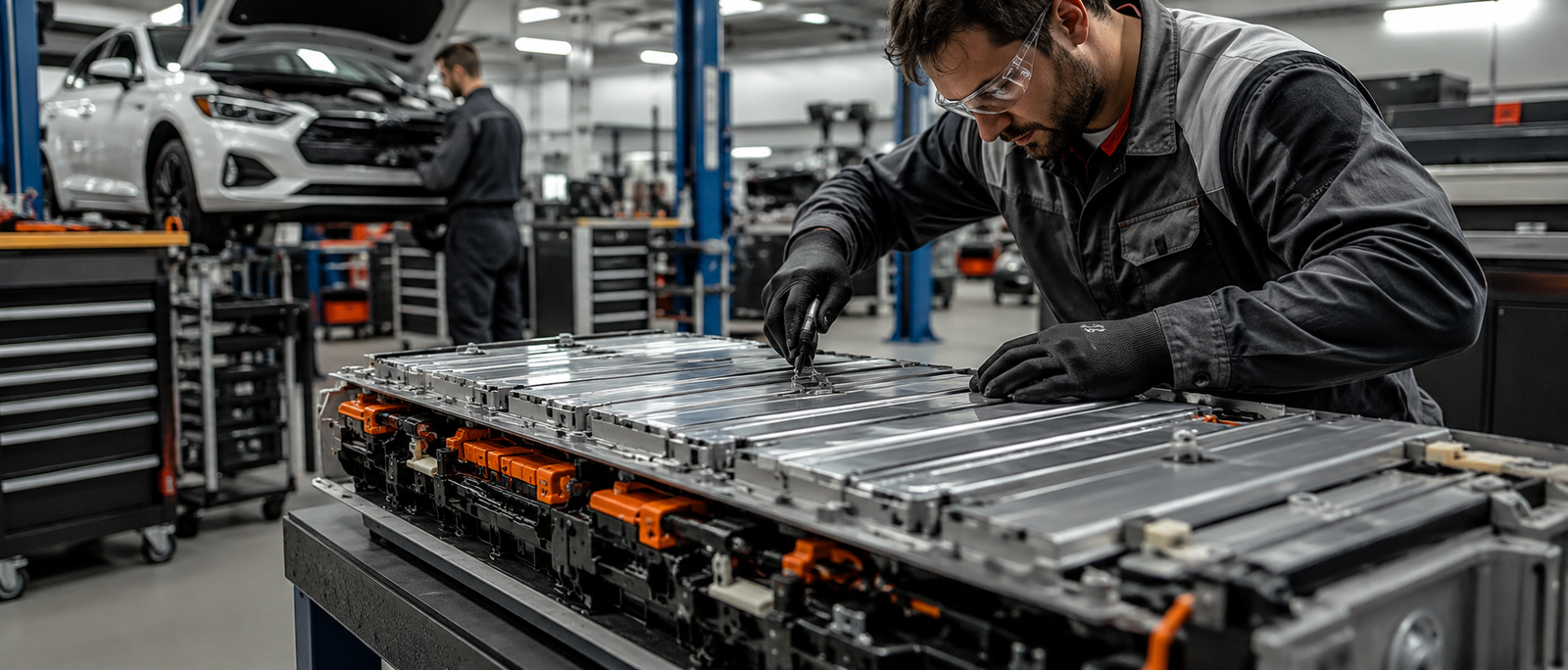
Hybrid vehicles have completely changed the way people think about daily commuting. Driving a hybrid offers the perfect balance of fuel efficiency, environmental responsibility, and long-term cost savings. However, the heart of any hybrid vehicle is its high-voltage battery pack. Over time, like any electrical component, these advanced battery systems experience natural wear and tear.
Understanding how your hybrid vehicle operates is essential to keeping it on the road for hundreds of thousands of miles. Many car owners believe that when a hybrid battery begins to show signs of weakness, an expensive trip to the dealership for a complete replacement is the only option. Fortunately, advanced automotive technology has made it possible to restore, service, and extend the lifespan of these specialized components without breaking the bank.
Whether you drive a Toyota Prius, a Honda Civic Hybrid, or a hybrid SUV, staying ahead of battery degradation can save you thousands of dollars. Local specialists who understand the unique driving conditions of Southern California can provide targeted diagnostic services to pin down exactly what your vehicle needs. If you notice a sudden drop in fuel efficiency or your dashboard warning lights illuminate, it is time to consider professional hybrid battery repair options to restore peak performance.
How a Hybrid Battery Works and Why It Degrades
To properly care for your hybrid vehicle, it helps to understand what goes on beneath the surface. Unlike traditional internal combustion engines that rely solely on gasoline, hybrid vehicles use a dual-system powertrain. A gasoline engine works in tandem with an electric motor powered by a high-voltage battery pack. This pack is typically composed of multiple individual battery modules connected in a series.
As you drive, the vehicle continuously charges and discharges these modules through a process called regenerative braking and kinetic energy recovery. While these systems are engineered for durability, they are not immune to the laws of chemistry. Over time, individual cells within the battery pack can develop imbalances.
When certain modules lose capacity faster than others, the vehicle computer detects a voltage variance. This variance triggers warning codes, forces the engine to run more frequently, and reduces your overall fuel economy. Environmental factors also play a massive role in battery longevity. Constant exposure to high temperatures can accelerate the chemical degradation inside the modules, making routine health checks absolutely vital.
Common Signs of Hybrid Battery Failure
Recognizing the early warning signs of a failing battery pack can prevent minor cell imbalances from turning into complete system failures. One of the most obvious symptoms is a noticeable drop in your miles per gallon. When the high-voltage battery cannot hold a proper charge, the internal combustion engine has to work overtime to propel the vehicle and charge the system, consuming significantly more fuel.
Another clear indicator is erratic behavior on your dashboard state-of-charge gauge. If you notice the battery graphic rapidly shifting from full to empty within a few minutes of driving, the modules are likely struggling to maintain a stable voltage. You might also notice that the auxiliary cooling fan in the backseat area runs continuously or sounds unusually loud as it attempts to cool down an overheating battery pack.
Finally, the appearance of the “Check Hybrid System” warning light or the dreaded master warning light means your vehicle computer has detected an active fault code. When these indicators appear, continuing to drive without professional intervention can place extra strain on the transmission, inverter, and traditional twelve-volt auxiliary battery.
Diagnostic Procedures for High-Voltage Systems
When you bring your vehicle to an experienced hybrid technician, the process always begins with a comprehensive digital diagnostic check. Specialized scanning tools connect directly to the vehicle onboard diagnostic port to communicate with the battery smart unit. This allows technicians to read specific error codes and analyze live data streams.
The primary goal of a diagnostic check is to look at individual module voltages under different load conditions. A healthy battery pack shows uniform voltage levels across all modules. If the scanner reveals that a few specific cells are dropping significantly lower than the rest during acceleration, those are identified as faulty modules.
In addition to software diagnostics, a physical inspection is performed to check for any signs of corrosion on the copper bus bars. In humid or coastal areas, moisture can cause corrosion to build up on the electrical connectors, increasing resistance and disrupting the flow of electricity. Cleaning or replacing these bus bars can sometimes resolve communication errors without requiring extensive internal repairs.
Cell Balancing and Conditioning Explained
When a battery pack is diagnosed with minor voltage imbalances, complete replacement is rarely the most practical or cost-effective first step. Instead, technicians can perform a highly technical process known as battery conditioning or reconditioning. This procedure is designed to balance the energy capacity across all individual modules.
The conditioning process involves removing the heavy battery pack from the vehicle and connecting it to a specialized industrial charge-conditioning system. The machine subjects the battery pack to multiple controlled deep discharge and recharge cycles. This process breaks up memory formations and crystalline deposits within the individual nickel-metal hydride cells, effectively restoring lost energy capacity.
After the deep cycling is complete, the technicians balance the state of charge across all modules so they work in perfect harmony. Conditioning can often restore up to ninety percent of the original factory performance, giving the battery pack a second lease on life at a fraction of the cost of a brand-new unit.
The Advantages of Module Repair Over Full Replacement
If the diagnostic scan reveals that specific modules are completely dead and cannot be saved by conditioning, targeted module replacement is an excellent alternative. A high-voltage hybrid battery pack contains dozens of individual cells, and it is very common for only one or two modules to fail while the remaining cells remain perfectly healthy.
During a module-level repair, the technician carefully disassembles the pack housing and removes only the defective cells. They then source a premium, quality-tested replacement module that matches the exact capacity, internal resistance, and voltage characteristics of the existing modules in your pack.
This precise matching is critical because installing an un-matched cell will cause the vehicle computer to flag a new error code almost immediately. By targeting only the broken components, this repair method keeps functional parts out of landfills, drastically reduces material waste, and provides a highly reliable, budget-friendly fix that gets you back on the road quickly.
When Is Full Battery Replacement Necessary
While localized repairs and conditioning are fantastic options for many drivers, there are specific situations where a full battery replacement is the most dependable choice. If a vehicle has exceptionally high mileage or has been sitting unused for many months, the chemical degradation across the entire pack may be too widespread for minor repairs to be effective.
When a battery pack has reached the absolute end of its functional lifespan, replacing the entire unit ensures long-term reliability. Drivers generally have two choices when it comes to full replacement: a premium reconditioned battery pack or a brand-new factory unit.
A high-quality rebuilt battery pack is assembled using completely refreshed, matching modules and comes thoroughly tested to ensure it meets strict performance standards. For those looking for the ultimate level of longevity, investing in a brand-new pack featuring fresh cells provides complete peace of mind for years to come. Professional installers will also handle the responsible environmental recycling of your old battery pack.
Maintenance Tips to Extend Your Hybrid Battery Life
Preventative maintenance is the secret to maximizing the lifespan of your hybrid vehicle high-voltage system. One of the simplest yet most overlooked maintenance tasks is keeping the battery cooling fan and air ducts completely clean. Most hybrid cars feature an air intake vent located near the rear seats that pulls cabin air in to cool the battery pack.
If pet hair, dust, or clothing items block this intake vent, the battery pack will run significantly hotter than intended. Excessive heat is the number one enemy of hybrid battery chemistry, as it accelerates the breakdown of internal components. Checking and cleaning the cooling fan filter every few months can dramatically lower operating temperatures.
Additionally, regular driving is essential for hybrid health. Leaving a hybrid vehicle parked in a garage for weeks at a time allows the high-voltage cells to naturally self-discharge. When a battery drops below a critical voltage threshold, it can suffer permanent capacity loss. Driving your hybrid vehicle for at least thirty minutes once a week keeps the chemical components active and properly charged.
Choosing the Right Local Hybrid Specialist
Working with high-voltage hybrid systems requires specialized training, unique safety equipment, and advanced diagnostic tools. Traditional automotive repair shops may not have the certifications or deep understanding required to safely navigate the complexities of electronic powertrains and inverter systems.
When looking for a repair provider, always look for facilities staffed by ASE certified technicians who specialize specifically in hybrid and electric vehicles. A reputable local specialist will offer upfront transparency, starting with an accurate diagnostic report rather than guessing at the issue.
It is also important to ask about the warranties offered on their parts and craftsmanship. A confidence-backed warranty of twelve, twenty-four, or thirty-six months shows that the facility stands behind the quality of their rebuilt packs and module repairs. Choosing a licensed and insured local professional ensures your vehicle remains safe, efficient, and reliable for all your driving needs.
Frequently Asked Questions
How long do hybrid batteries typically last before needing attention?
Most original factory hybrid battery packs are engineered to last between one hundred thousand and one hundred fifty thousand miles, which translates to roughly eight to ten years of standard driving. However, lifespan can vary based on individual driving habits, local climate conditions, and how well the vehicle cooling system is maintained over time.
Is it safe to drive my car with the check hybrid system light on?
It is highly recommended that you do not drive your vehicle for extended periods once the hybrid warning light comes on. While the vehicle may enter a limp mode that allows you to drive a short distance to a safe location, operating the car with a severely imbalanced battery pack can cause serious secondary damage to the transmission, internal inverter components, or the twelve-volt auxiliary battery.
What is the difference between a reconditioned battery and a new one?
A brand-new hybrid battery consists of completely fresh factory-manufactured cells that have never been used, offering the maximum possible lifespan. A reconditioned battery is an original pack that has been disassembled, thoroughly tested, cleared of faulty modules, and subjected to deep balancing cycles to restore its energy capacity to optimal working standards at a much lower cost.
How long does a typical hybrid battery repair service take to complete?
The timeline depends on the exact type of service required for your vehicle. A standard high-voltage digital diagnostic test can generally be completed in under an hour. If your vehicle requires a module repair or a complete battery pack replacement, a specialized shop with proper parts in stock can often complete the entire installation process within a single day.
Can a dead twelve-volt battery cause hybrid system warning lights to turn on?
Yes, a weak or failing traditional twelve-volt auxiliary battery is a very common cause of false hybrid system warning lights. The twelve-volt battery is responsible for powering the vehicle computer systems and booting up the hybrid relays. If its voltage drops too low, it can trigger erroneous error codes across the entire network, which is why technicians always test the twelve-volt system during a standard diagnostic evaluation.
