

Jordan offers one of the most rewarding travel experiences in the Middle East. Within a relatively small geographic area, visitors can explore remarkably preserved Roman cities, walk through ancient Nabataean monuments, cross dramatic desert landscapes, and unwind beside the mineral-rich waters of the Dead Sea.
The challenge for most travelers isn’t deciding what to see—it’s fitting Jordan’s highlights into a single week without spending too much time on the road.
A carefully planned 7 day Jordan tour makes that possible. By following a logical route through the country’s most significant cultural and natural landmarks, you can experience Jordan’s history, landscapes, and hospitality without feeling rushed from one destination to the next.
This itinerary combines world-famous attractions such as Petra and Wadi Rum with lesser-known historical treasures, scenic drives, and opportunities to slow down and appreciate the country’s distinctive character. Whether you’re visiting Jordan for the first time or looking for a well-balanced travel plan, this route offers an excellent introduction to one of the region’s most fascinating destinations.
Day 1: Arrive in Amman and Discover Jordan’s Capital
Your journey begins in Amman, one of the world’s oldest continuously inhabited cities. While many visitors treat it as a simple arrival point, the capital deserves more than a quick overnight stay.
Start your afternoon at the Amman Citadel, where layers of Roman, Byzantine, and early Islamic history overlook the city’s rolling hills. Walking among ancient ruins while hearing the evening call to prayer creates a memorable introduction to Jordan’s rich cultural heritage.
Afterward, head to Downtown Amman.
The atmosphere changes instantly.
Busy markets, traditional cafés, family-run bakeries, and spice shops line the streets, offering an authentic glimpse into daily Jordanian life.
If time allows, visit the beautifully preserved Roman Theatre before enjoying dinner at a local restaurant known for traditional Jordanian cuisine.
Travel Tip
Plan an easy first day rather than filling every hour with sightseeing. Long international flights and airport procedures can make even experienced travelers tired, and you’ll appreciate starting your adventure at a relaxed pace.
Suggested Highlights
- Explore the Amman Citadel
- Visit the Roman Theatre
- Walk through Downtown markets
- Enjoy authentic Jordanian cuisine
Day 2: Explore Jerash and Ajloun
Leave Amman after breakfast and travel north toward Jerash, often considered one of the finest preserved Roman cities outside Italy.
Unlike many archaeological sites where visitors rely heavily on imagination, Jerash still feels remarkably complete. Stone-paved streets, towering columns, grand plazas, and impressive arches remain intact, allowing you to picture life here nearly two thousand years ago.
Take your time walking along the Cardo Maximus, where the original paving stones still bear marks from ancient chariot wheels.
Small details like these make the visit unforgettable.
After lunch, continue to Ajloun Castle, perched high above the surrounding hills. Built during the era of Saladin, the fortress once protected important trade routes and remains one of Jordan’s best-preserved Islamic castles.
On clear days, the panoramic views stretch across forests, valleys, and neighboring countries.
The contrast between Roman architecture in Jerash and medieval Islamic military design in Ajloun offers a fascinating perspective on Jordan’s diverse history.
Practical Planning
- Wear supportive walking shoes.
- Carry water, especially during warmer months.
- Allow at least three hours to fully explore Jerash.
Day 3: Travel Along the King’s Highway to Petra
Today is less about reaching Petra quickly and more about enjoying one of Jordan’s most scenic drives.
Instead of taking the faster desert highway, travel along the historic King’s Highway, an ancient trade route that winds through dramatic valleys, traditional villages, and centuries-old landmarks.
The first stop is Madaba, famous for its remarkable Byzantine mosaics, including the renowned mosaic map of the Holy Land inside St. George’s Church.
Continue toward Mount Nebo, traditionally believed to be the place where Moses viewed the Promised Land. On a clear day, the panoramic scenery stretches across the Jordan Valley toward Jerusalem.
Further south, the landscape becomes increasingly dramatic.
Deep canyons, winding mountain roads, and rugged cliffs replace urban scenery, creating some of Jordan’s most photogenic viewpoints.
If your schedule allows, make a stop at Kerak Castle, one of the region’s largest Crusader fortresses. Exploring its underground passages and massive stone halls offers a completely different historical experience from the Roman ruins visited earlier.
Arrive in Petra by early evening and settle into your hotel.
Don’t try to squeeze in sightseeing tonight.
Tomorrow deserves your full energy.
Day 4: Experience Petra Beyond the Famous Treasury
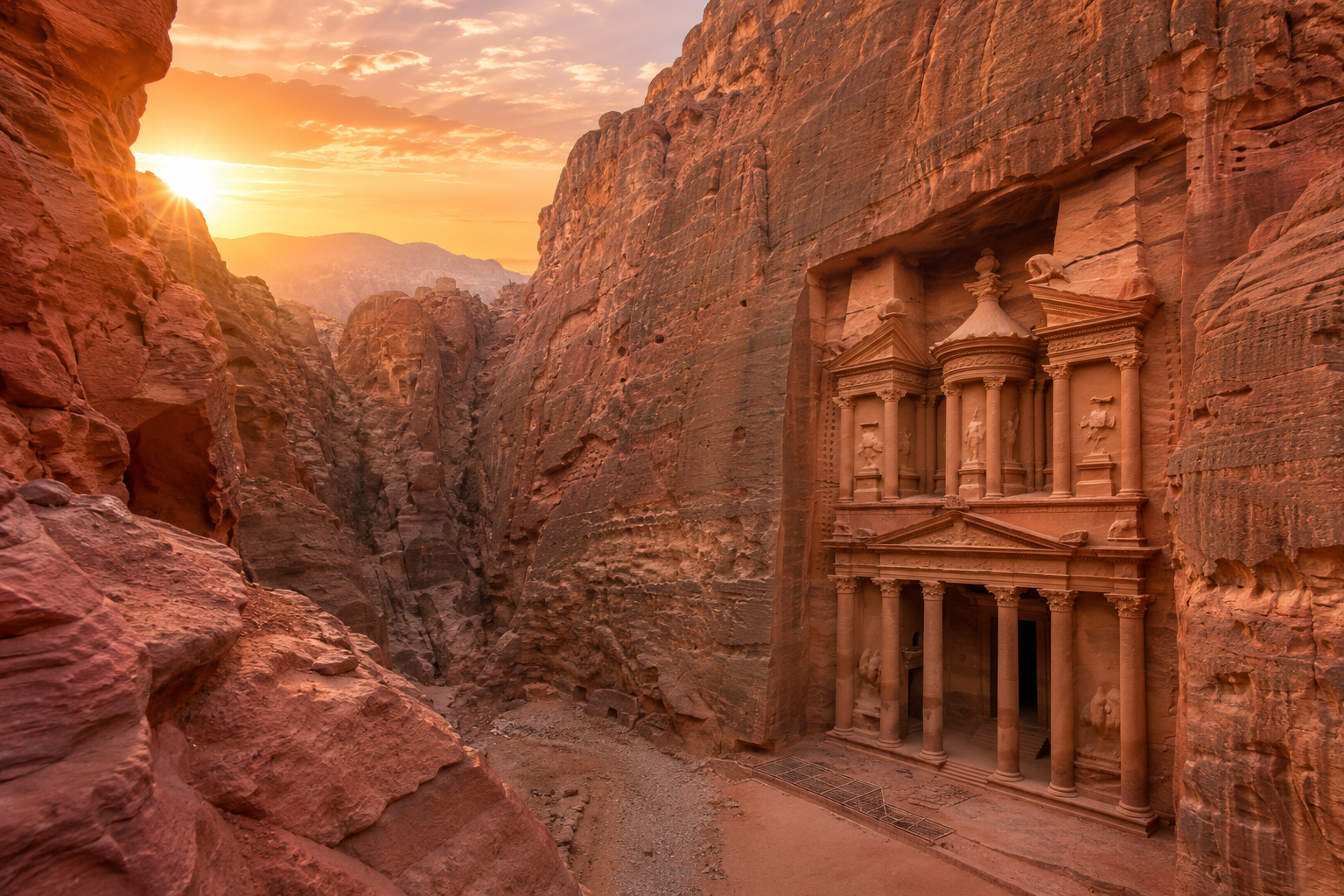
Petra is Jordan’s most celebrated attraction, but focusing solely on the Treasury means missing much of what makes this ancient city extraordinary.
The experience begins with a walk through the Siq, a narrow sandstone canyon that gradually reveals Petra’s most iconic monument. As the Treasury comes into view, it’s easy to understand why the site is considered one of the world’s greatest archaeological treasures.
Yet Petra extends far beyond this famous façade. Ancient tombs, ceremonial spaces, temples, and hiking trails spread across a vast landscape that rewards visitors who dedicate an entire day to exploration. The Royal Tombs, Street of Facades, and the impressive Monastery each offer a different perspective on the ingenuity of the Nabataean civilization.
Insider Advice
Arrive when the site opens.
The cooler temperatures, softer morning light, and fewer visitors create a much more enjoyable experience, especially during spring and autumn.
Helpful Logistics
- Allocate at least 6–8 hours inside Petra.
- Carry reusable water bottles and sun protection.
- Wear sturdy footwear with good grip.
- Bring light snacks for longer walking sections.
- Consider hiring a licensed local guide for historical context rather than relying solely on guidebooks
Day 5: Discover Little Petra Before Heading into Wadi Rum
After an active day in Petra, begin your morning with a visit to Little Petra (Siq al-Barid), a smaller Nabataean site located about 15 minutes from Petra. Many travelers skip it because they’re eager to reach Wadi Rum, but it’s well worth the stop.
Little Petra feels quieter.
The narrow sandstone passageways, carved façades, and ancient gathering spaces offer a glimpse into how merchants and travelers once rested along important trade routes. Without the larger crowds found at Petra, you can appreciate the craftsmanship at your own pace.
From there, continue south to Wadi Rum, Jordan’s vast protected desert famous for its towering sandstone mountains, red dunes, and dramatic rock formations.
A guided 4×4 excursion is one of the best ways to experience the landscape. Stops typically include natural rock bridges, ancient inscriptions, and panoramic viewpoints where the silence of the desert becomes part of the experience.
As evening approaches, the scenery transforms again.
The warm light reflects across the sand, creating shades of orange, gold, and deep red that photographers love—but even without a camera, it’s a memorable sight.
Spend the night in a well-appointed desert camp where comfort blends naturally with the surrounding landscape. Enjoy a traditional dinner before looking up at one of the clearest night skies in the region.
Insider Tip
Desert temperatures can change quickly after sunset. Even if you’re visiting during warmer months, pack a light jacket for the evening.
Day 6: Relax and Recharge at the Dead Sea
After breakfast, leave the desert behind and travel to the Dead Sea, the lowest point on Earth.
This is the perfect place to slow down after several days of sightseeing.
Unlike a typical beach destination, the Dead Sea offers a unique wellness experience. The high salt concentration allows you to float effortlessly, while the mineral-rich mud has long been associated with skin care and relaxation.
Don’t expect to swim in the usual sense.
You’ll simply lean back and float.
Many visitors spend part of the afternoon enjoying spa treatments, relaxing by the pool, or taking in the peaceful views across the water.
A luxury stay here provides an ideal balance to the more active first half of the itinerary, allowing you to end your journey feeling refreshed rather than exhausted.
Travel Notes
- Avoid getting water in your eyes.
- Remove any cuts or scrapes before entering the water, as the salt can sting.
- Bring sandals with good grip, as the shoreline can be uneven.
- Limit your floating session to around 15–20 minutes before rinsing off.
Day 7: Return to Amman for Departure
Your final day depends on your flight schedule, but if time allows, enjoy one last breakfast overlooking the Dead Sea before returning to Amman.
If you have several hours before departure, consider stopping at local artisan shops or enjoying a leisurely lunch instead of rushing directly to the airport.
It’s a calm finish to a week filled with remarkable experiences.
From Roman cities and biblical landmarks to desert adventures and peaceful spa escapes, this itinerary showcases Jordan’s diversity without requiring constant hotel changes or long travel days.
That’s one reason many travelers find a 7 day Jordan tour to be the ideal introduction to the country.
Practical Tips for Planning a 7 Day Jordan Tour
A little preparation can make your trip considerably smoother.
- Visit during spring or autumn for comfortable sightseeing temperatures.
- Dress modestly when visiting religious or cultural sites.
- Carry some local currency for smaller purchases, although cards are widely accepted in hotels and many restaurants.
- Book key experiences, particularly Petra visits and Wadi Rum excursions, in advance during peak travel seasons.
- Choose accommodations close to major attractions whenever possible to reduce unnecessary transfers.
- Allow flexibility in your schedule for scenic stops and unexpected discoveries along the way.
Why This Route Works So Well
Many first-time visitors try to fit every major attraction in Jordan into a single trip. While ambitious, that approach often leads to long travel days and limited time at the destinations that matter most.
This itinerary follows a practical north-to-south route that minimizes unnecessary backtracking while maximizing time spent exploring. Historical sites, cultural experiences, desert landscapes, and relaxation are distributed evenly throughout the week, creating a journey that feels balanced rather than rushed.
By combining Jordan’s most iconic attractions with carefully chosen stops along the way, travelers gain a deeper understanding of the country’s history, geography, and culture without sacrificing comfort or convenience.
Final Thoughts
Few destinations offer the variety that Jordan delivers in just seven days. One day you’re exploring the colonnaded streets of an ancient Roman city; the next, you’re standing before the rose-colored monuments of Petra or watching the sunset illuminate the desert landscapes of Wadi Rum. By the end of the journey, the calm waters of the Dead Sea provide the perfect setting to reflect on everything you’ve experienced.
A well-designed 7 day Jordan tour isn’t about checking attractions off a list. It’s about experiencing the country’s history, culture, natural beauty, and hospitality through a route that feels both rewarding and manageable.
For travelers seeking a destination that combines archaeological wonders, dramatic scenery, and genuine cultural experiences, Jordan remains one of the most compelling choices in the region—and seven days is enough to discover why.
