

Most new guitar players walk out of the store with a guitar, an amp, and a cable, and assume that’s the whole shopping list.
There’s a second tier of electric guitar accessories that rarely make the obvious checklist but end up saving money, protecting gear, and preventing the kind of small frustrations that quietly chip away at motivation. None of these is expensive.
All of them are easy to forget until the moment you actually need one.
Why the “Obvious” List Isn’t the Full List
Ask any new guitarist what they need, and you’ll get the same five answers: guitar, amp, cable, picks, tuner. That list isn’t wrong, but it’s incomplete. It covers the gear you need to make sound. It doesn’t cover the gear that keeps your sound consistent, your guitar protected, or your hands and ears intact over years of playing.
The accessories below are the ones that experienced players rarely talk about, mostly because they bought them after a problem had already happened. Buying them in advance means skipping that problem entirely.
Strap Locks
A basic strap works fine until it doesn’t. Standard strap buttons rely on simple pressure to hold a strap in place, and sudden movement, leaning back, or twisting to grab a pedal, can pop a strap loose mid-song. The guitar hits the floor, and depending on the fall, that’s a chipped finish at best and a cracked neck at worst.
A Cable Tester
Cables are the most overlooked point of failure in any guitar setup. A cable can look perfectly fine on the outside while a single broken solder joint inside causes crackling, dropouts, or total silence. Most beginners assume the problem is their amp, their pickups, or even their playing, when it’s a five-dollar cable quietly failing.
A small cable tester takes seconds to use and immediately tells you whether the problem is the cable or something else. Without one, troubleshooting a dead signal usually means swapping out gear piece by piece, which wastes time during practice or, worse, during a soundcheck.
A String Winder and Cutter
Changing strings by hand works, but it’s slow, and it’s easy to leave string ends too long, which can scratch hands or snag clothing during a performance. A simple winder speeds up the process significantly, and a built-in cutter means you’re not hunting for pliers afterward.
This tool rarely makes a first-purchase list because new players usually don’t change their own strings yet. By the time strings start sounding dull or breaking, a winder and cutter suddenly becomes the accessory everyone wishes they’d bought sooner.
Hearing Protection Built for Music
Standard foam earplugs muffle everything evenly, which means they cut out the detail you actually want to hear while practicing or playing live. Musician’s earplugs are built differently. They reduce overall volume while preserving the balance between highs, mids, and lows, so practice still sounds like practice instead of a phone call through a pillow.
Hearing damage from cumulative volume exposure is gradual and permanent, which is exactly why it’s easy to ignore until it’s too late to reverse. A pair of musician’s earplugs costs less than a single guitar cable and protects something no amount of gear money can fix later.
Leaning a guitar against an amp, a wall, or a chair feels harmless until the moment it slides, tips, or gets bumped. A simple folding stand costs little and removes that risk entirely, while also making the guitar more likely to actually get picked up and played rather than zipped away in a case.
A Small Humidity Control Solution
This one catches even guitarists who’ve played for years. Wood instruments respond to humidity changes more than most players realize, and dry conditions in particular can lead to fret edges that feel sharp, tuning instability, or, in more extreme cases, small cracks. A simple in-case humidifier or humidity packet is inexpensive insurance against a problem that’s expensive and sometimes irreversible once it happens.
Quick Reference: Commonly Forgotten Accessories
| Accessory | Problem It Prevents | Typical Cost Range |
| Strap locks | Guitar falling mid-performance | Low |
| Cable tester | Wasted troubleshooting time | Low |
| String winder and cutter | Slow string changes, snagging string ends | Low |
| Musician’s earplugs | Long-term hearing damage | Low to moderate |
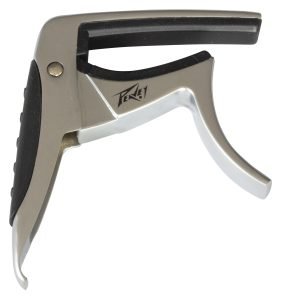
| Capo | Limited key flexibility | Low |
| Guitar stand | Accidental drops and dings | Low |
| Humidity control | Fret and neck issues from dry air | Low |
Frequently Asked Questions
Do I really need strap locks if I mostly play sitting down?
If you ever plan to stand and play, even occasionally, strap locks are worth it. The risk isn’t about how often you stand, it’s about the one unexpected moment when a regular strap button lets go.
Are musicians’ earplugs different from regular foam earplugs?
Yes. Standard foam earplugs cut high frequencies more aggressively than lows, which muddies the sound. Musician’s earplugs reduce volume more evenly, so music still sounds balanced and detailed at a lower, safer level.
How often should I check my cables?
It’s worth testing cables anytime you notice unexplained crackling, dropouts, or buzzing, and periodically if you gig or rehearse often. Cables degrade with repeated coiling and uncoiling, even with careful handling.
Is a humidity control product necessary for electric guitars, or just acoustics?
Electric guitars are less sensitive than acoustics, since they don’t rely on a vibrating top for tone, but the neck and fretboard are still wood and still react to dry conditions, especially during winter months with indoor heating.
What’s the most overlooked accessory for someone who just started playing?
A cable tester tends to surprise people the most, since a single bad cable can mimic dozens of other gear problems and send a beginner chasing the wrong fix entirely.
The Bottom Line
None of these electric guitar accessories show up on a typical first-purchase checklist, and that’s exactly why they’re worth knowing about ahead of time. Each one solves a specific, common problem before it happens rather than after, which is a far cheaper and less frustrating way to build a setup that actually holds up over years of playing.
