

Artificial Intelligence (AI) is no longer a futuristic concept. It has become a powerful tool that is changing the way healthcare professionals diagnose, treat, and manage neurological disorders. From analyzing complex brain scans to predicting disease progression, AI is helping neurologists make more informed decisions and improve patient outcomes.
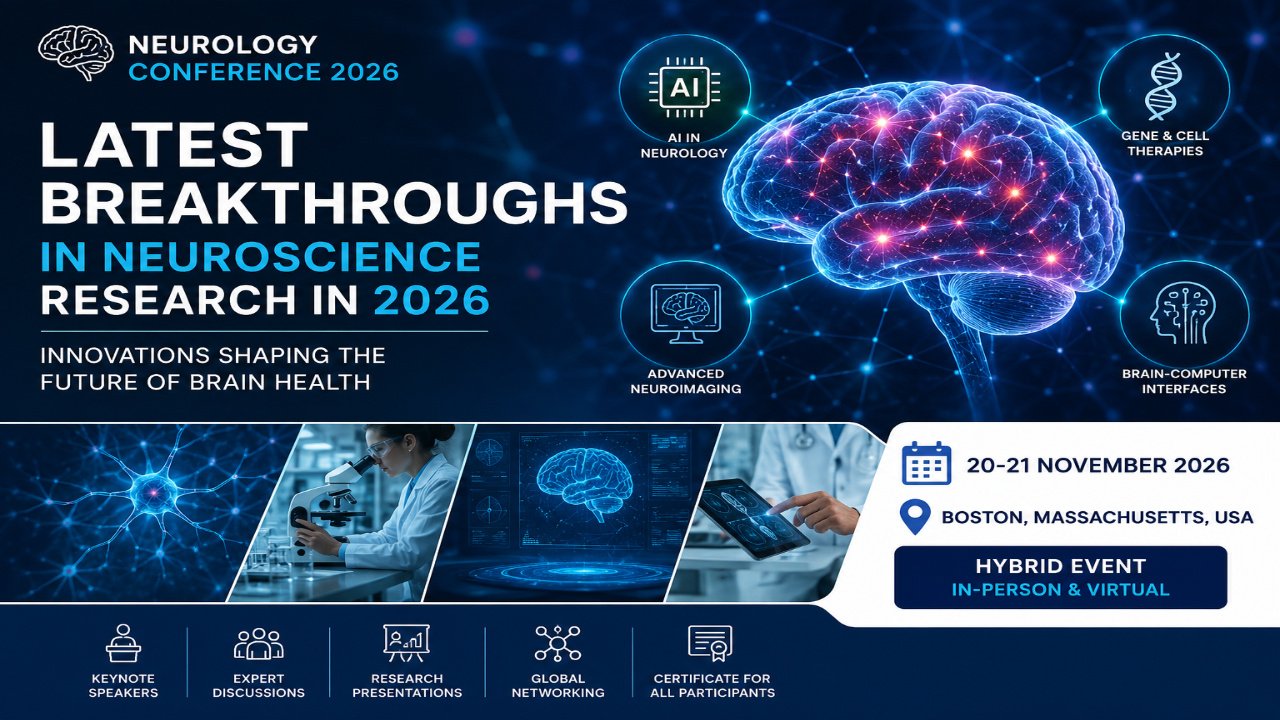
As neuroscience continues to advance, the role of artificial intelligence has become increasingly important. Researchers, clinicians, and technology experts are working together to develop innovative solutions that support brain health and neurological care. This growing impact of AI is one of the major topics expected to be discussed at the Neurology Conference 2026, where experts will explore how technology is shaping the future of neuroscience.
Understanding Artificial Intelligence in Neurology
Artificial intelligence refers to computer systems that can perform tasks that normally require human intelligence. These systems can analyze data, recognize patterns, make predictions, and support decision-making processes.
In neurology, AI is being used to process large amounts of medical information, including:
- Brain imaging data
- Electronic health records
- Genetic information
- Clinical research data
- Patient monitoring reports
By analyzing these datasets quickly and accurately, AI can help healthcare professionals identify conditions earlier and create more personalized treatment plans.
Improving Early Detection of Neurological Disorders
One of the biggest challenges in neurology is identifying diseases before symptoms become severe. Many neurological conditions develop gradually, making early diagnosis difficult.
AI is helping solve this challenge by detecting subtle patterns that may indicate disease progression.
Researchers are using AI to improve early detection of:
- Alzheimer’s disease
- Parkinson’s disease
- Multiple sclerosis
- Epilepsy
- Stroke-related conditions
Early diagnosis allows healthcare providers to begin treatment sooner, which can significantly improve long-term patient outcomes.
This area of innovation continues to attract attention within neuroscience research and will likely remain a key focus at International Neurology Conference 2026.
Revolutionizing Brain Imaging Analysis
Brain imaging plays a critical role in modern neurology. Technologies such as MRI, CT scans, and PET scans generate vast amounts of information that require careful analysis.
Artificial intelligence is helping neurologists by:
- Identifying abnormalities faster
- Improving image accuracy
- Detecting early signs of disease
- Supporting diagnostic decisions
AI-powered imaging tools can often recognize patterns that may be difficult for the human eye to detect.
As a result, healthcare professionals can make faster and more confident clinical decisions while reducing diagnostic delays.
Supporting Personalized Treatment Plans
Every patient experiences neurological disorders differently. This is why personalized medicine is becoming increasingly important.
AI helps neurologists develop individualized treatment strategies by analyzing:
- Medical history
- Genetic factors
- Lifestyle information
- Treatment responses
Instead of applying the same treatment to every patient, doctors can use AI insights to recommend therapies that are more likely to be effective.
This patient-centered approach is transforming neurological care and improving treatment outcomes.
Enhancing Stroke Care and Recovery
Stroke remains one of the leading causes of disability worldwide. Quick diagnosis and immediate treatment are essential for improving recovery.
Artificial intelligence is supporting stroke care through:
- Rapid image analysis
- Risk prediction models
- Emergency response support
- Rehabilitation planning
AI-powered tools can help healthcare teams identify stroke patients faster and determine the most appropriate treatment options.
Researchers are also exploring how AI can improve rehabilitation by tracking patient progress and recommending personalized recovery programs.
Accelerating Neuroscience Research
Scientific research often involves analyzing enormous amounts of data. AI has become an invaluable tool for researchers because it can process information much faster than traditional methods.
In neuroscience research, AI is helping scientists:
- Discover disease biomarkers
- Analyze clinical trial data
- Identify research patterns
- Develop predictive models
These capabilities are accelerating discoveries and helping researchers uncover new insights into neurological disorders.
The integration of AI into research workflows is expected to remain a major topic at the Neurology Conference 2026.
AI and Neurotechnology: A Powerful Combination
Artificial intelligence and neurotechnology are increasingly working together to create innovative healthcare solutions.
Examples include:
- Brain-computer interfaces
- Smart neurological monitoring devices
- Wearable brain health technologies
- Neurostimulation systems
These technologies collect vast amounts of neurological data, which AI can analyze to provide valuable clinical insights.
The combination of AI and neurotechnology is opening new possibilities for diagnosis, rehabilitation, and long-term neurological care.
Challenges and Ethical Considerations
While AI offers many benefits, it also raises important ethical and practical questions.
Healthcare professionals must consider:
- Data privacy
- Patient confidentiality
- Algorithm transparency
- Bias in AI systems
- Regulatory compliance
AI should support healthcare professionals rather than replace human expertise. Maintaining a balance between technology and clinical judgment is essential.
Researchers and healthcare organizations continue to work toward responsible and ethical implementation of AI in healthcare.
The Future of AI in Neurology
The future of artificial intelligence in neurology looks extremely promising. As technology continues to improve, AI may become even more integrated into clinical practice.
Future developments may include:
- Real-time neurological monitoring
- Advanced predictive analytics
- Improved disease prevention strategies
- More accurate diagnostics
- Enhanced personalized medicine
These innovations could significantly improve patient care and help healthcare providers manage neurological disorders more effectively.
Why Neurology Professionals Should Pay Attention
For neurologists, researchers, and healthcare professionals, understanding AI is becoming increasingly important. Technology is rapidly influencing every aspect of neuroscience, from diagnosis and treatment to research and education.
Events such as the Neurology Conference 2026 provide valuable opportunities to learn about these innovations, connect with experts, and explore practical applications of AI in neurological care.
Professionals who stay informed about technological advancements will be better prepared to adapt to the future of healthcare.
Conclusion
Artificial intelligence is transforming neurology in ways that were unimaginable just a few years ago. From improving diagnostic accuracy to supporting personalized treatment plans and accelerating research, AI is helping healthcare professionals deliver better outcomes for patients.
As technology continues to evolve, the partnership between artificial intelligence, neuroscience, and neurotechnology will become even stronger. The discussions taking place at events like the Neurology Conference 2026 highlight the importance of innovation in shaping the future of brain health.
For researchers, clinicians, and healthcare leaders, understanding the role of AI in neurology is no longer optional—it is essential for navigating the future of neuroscience and patient care.
