

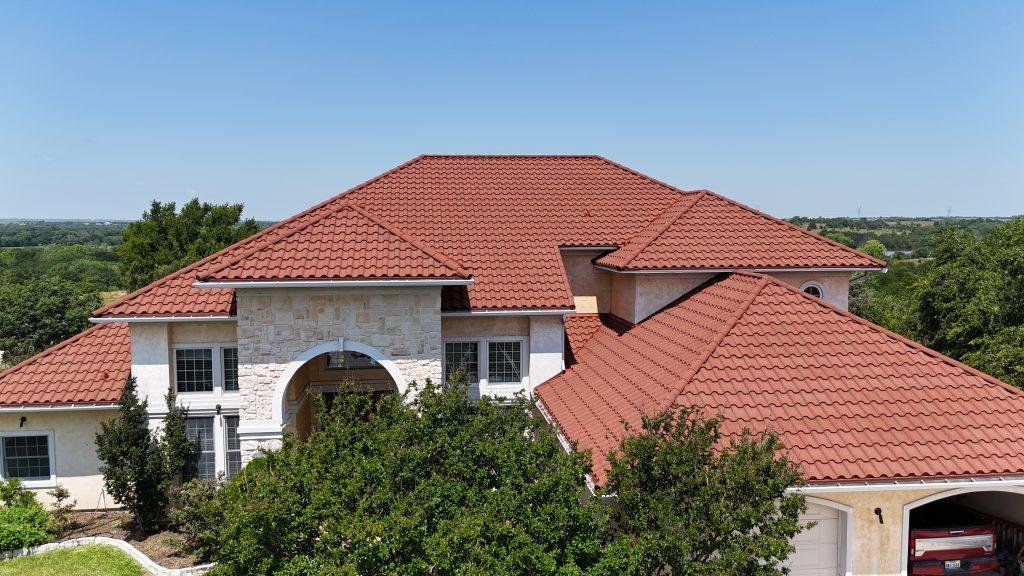
If you’ve lived in Dallas-Fort Worth for any length of time, you know the heat isn’t just uncomfortable — it’s relentless. What many homeowners don’t realize is that the same sun beating down on their driveway is silently aging their roof faster than almost anything else. Texas heat doesn’t just make your attic stuffy. It literally takes years off your roof’s life.
The Science of UV Degradation
Asphalt shingles — the most common roofing material in North Texas — are designed with protective granules that reflect sunlight and shield the underlying asphalt from direct UV exposure. Over time, those granules break down. Ultraviolet radiation causes the asphalt to become brittle, lose its flexibility, and eventually crack. Once cracks form, moisture finds its way in, and the cycle of deterioration accelerates dramatically.
In a climate like DFW’s, where we see 230+ sunny days per year and summer temperatures routinely climb past 100°F, this degradation happens faster than it would in cooler regions. A roof rated for 25–30 years may realistically last 15–20 years here without proper care.
Thermal Cycling: The Hidden Stressor
Texas doesn’t just get hot — it swings. A summer day might start at 78°F, climb to 104°F by mid-afternoon, and drop back into the 80s overnight. These daily temperature swings cause roofing materials to expand and contract repeatedly. This process, called thermal cycling, stresses every seam, fastener, and seal on your roof.
Over thousands of cycles, fasteners loosen, flashing separates, and shingles curl. The damage isn’t always visible from the ground, but it’s happening nonetheless. By the time you see a leak, the underlying issue has likely been developing for months or years.
Attic Ventilation Makes the Difference
The single most overlooked factor in heat-related roof damage is attic ventilation. A properly ventilated attic allows hot air to escape and cooler air to enter, keeping the underside of your roof deck closer to ambient temperature. Without it, trapped heat bakes your shingles from underneath while the sun bakes them from above — a double assault that can cut shingle lifespan in half.
Ridge vents, soffit vents, and powered attic fans all play a role. At StazOn Roofing, we inspect ventilation as part of every roof evaluation because we’ve seen firsthand how proper airflow can add years to a roof’s service life in Texas.
Reflective Roofing: A Smarter Option
If you’re facing a roof replacement in the near future, consider reflective or “cool roof” materials. Modern architectural shingles with reflective granules, metal roofing with cool-color coatings, and even specialized reflective coatings for existing roofs can reduce surface temperatures by 30–50°F. That translates directly into lower attic temperatures, reduced cooling bills, and less thermal stress on your roofing materials.
Protect Your Investment
The Texas heat isn’t going anywhere. But with regular roof maintenance — including annual inspections, gutter cleaning, and ventilation checks — you can significantly slow the aging process. StazOn Roofing has been protecting DFW homes since 1980. We know what this climate does to roofs, and we know how to fight back.
If it’s been more than a year since your last roof inspection, the heat is already winning. Call StazOn Roofing today at 214-466-1518 for a FREE estimate and let our 45+ years of local experience work for you.
