

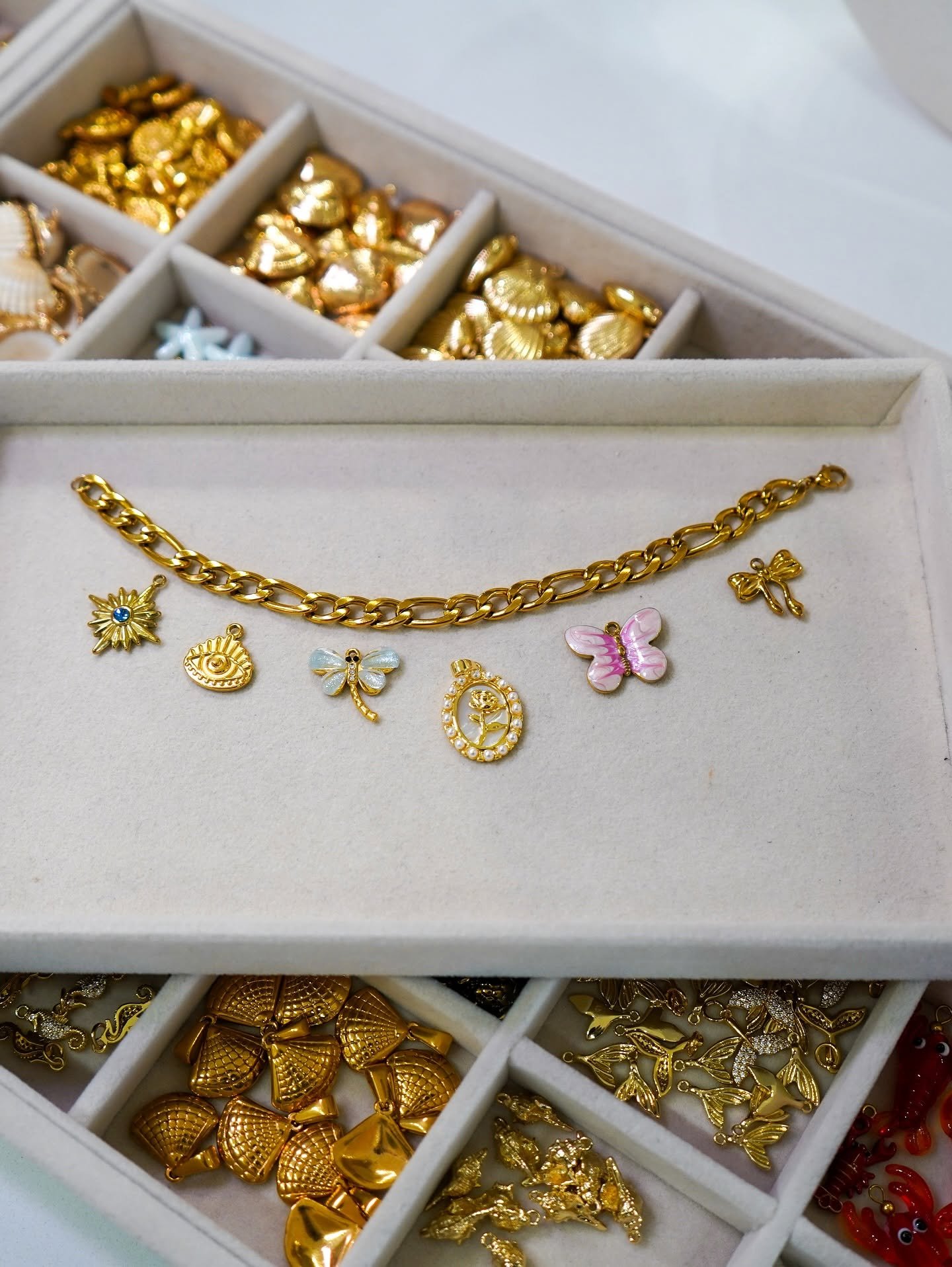
Most people accumulate jewelry rather than build it. A piece received as a gift here, a sale impulse purchase there, a souvenir from a trip, a trend-following buy that felt irresistible for six months and then sat unworn for three years. The result is a drawer full of pieces that do not relate to each other, have no coherent logic as a collection, and represent a significant accumulated investment that delivers far less pleasure and utility than it should.
A deliberately built jewelry wardrobe works differently. It starts from a clear understanding of how you actually dress, what metals and materials you genuinely wear and maintain well, what pieces you reach for when you need to feel confident or put together, and what occasions and contexts your life genuinely contains. From that foundation, it builds outward in a way that makes every addition genuinely useful rather than an impulse to be regretted later.
This guide is a comprehensive framework for thinking about jewelry as a wardrobe rather than a collection of individual purchases, covering the foundational pieces worth investing in, the decisions that determine whether additions are useful or redundant, the material choices that affect longevity, and the editing processes that keep a jewelry wardrobe functional rather than merely large.
Starting With Self-Knowledge: The Audit That Changes How You Buy
Before any purchasing decision, the most valuable thing you can do for your jewelry wardrobe is to conduct an honest audit of what you already own and, more importantly, what you actually wear. Lay out everything. Separate it into three categories: pieces you reach for consistently, pieces you wear occasionally for specific occasions, and pieces you never or rarely wear.
The pieces you reach for consistently represent your actual taste and lifestyle, not the taste you aspire to or the lifestyle you imagine for yourself. These are the pieces worth replicating or building around. The pieces worn occasionally for specific occasions are worth keeping if those occasions genuinely arise, and worth honestly evaluating if they have not arisen in more than two years. The pieces you never wear are the most revealing category: understanding why you never wear them identifies the mistakes you make when buying jewelry impulsively, so you can stop repeating them.
Common patterns in the never-worn category include pieces bought during trend cycles that have passed, pieces chosen for an idealized version of your wardrobe rather than the actual one, pieces received as gifts that were well-intentioned but do not fit your style, and pieces bought for a specific occasion that proved to be a single-use purchase rather than the versatile piece you convinced yourself it would be.
The Concept of a Jewelry Capsule: Fewer Pieces, More Function
The concept of a capsule wardrobe, a small number of high-quality, versatile pieces that work together and cover most occasions, applies to jewelry with equal force. A jewelry capsule is not about minimalism for its own sake but about maximizing the utility of each piece by ensuring it earns its place through consistent, genuine use.
A functional jewelry capsule for most people consists of roughly five to eight pieces that work together across the range of contexts their life actually contains. The specific pieces vary by lifestyle, but the principles are consistent. Each piece should earn a place by being worn at minimum several times per week, or by being genuinely irreplaceable for the specific occasions it serves. Each piece should work with most of the clothing in your wardrobe rather than only with a narrow subset. Each piece should be made from materials that will hold up to the frequency with which you plan to wear it.
The capsule framework is particularly useful because it makes the criteria for additions explicit rather than leaving them implicit. Adding a new piece to a capsule requires either that it genuinely replaces something, that it fills a gap you have identified as real rather than imagined, or that it serves an occasion that genuinely exists in your life but is not currently covered by what you own.
The Core Pieces: What Most Jewelry Wardrobes Need
Across the wide range of personal styles, lifestyle contexts, and aesthetic preferences, a few categories of jewelry pieces appear consistently in the most functional jewelry wardrobes. These are not universal prescriptions, because personal style is genuinely variable, but they represent a starting point for thinking about what foundational pieces are worth investing in.
A pair of everyday earrings that can be worn without thought for most occasions. These are typically simple studs or small hoops in a metal you wear consistently. The key word is everyday: these should be the earrings you reach for automatically on most mornings without a second thought. Investing in quality here, in a genuine precious metal at a quality level that will last without tarnishing or causing reactions, pays long-term dividends because you will wear them constantly.
A wrist piece that works daily. This might be a watch, a single bracelet, a permanent bracelet that is simply always present, or a combination. The wrist is the most watched part of the arm during daily interaction, and a wrist piece that works well becomes a reliable anchor for the rest of your jewelry and outfit choices.
A necklace at a versatile length. A princess length necklace in a clean, simple design that works across most necklines provides consistent value across the widest range of wearing contexts. This is typically a chain with a small pendant or a chain alone, chosen in a metal that matches the rest of your foundational pieces.
A ring that you wear consistently, whether a simple band or a single statement ring that you reach for reliably. Many people find that rings are the most personal category of jewelry, where the piece-by-person connection is strongest, and investing in one genuinely meaningful ring that is worn daily is more valuable than a drawer of rings that are worn interchangeably.
Metal Cohesion: Why Choosing a Primary Metal Tone Matters
One of the most common sources of frustration in a jewelry wardrobe that does not quite work is an inconsistent metal tone across pieces. Yellow gold, white gold or silver, and rose gold are all valid choices, but they are not interchangeable within the same outfit. A collection that mixes all three without a dominant tone produces combinations that look scattered rather than considered.
The most functional approach is to identify a primary metal tone and make it the default for your foundational pieces, then reserve the secondary tone (if you use one at all) for accent pieces that are worn separately from the foundational ones rather than layered with them. This does not mean never mixing metals, which can be done effectively with the right approach, but it does mean having a clear dominant tone rather than treating all metals as interchangeable.
The choice of primary metal should be based on what you actually reach for now, not on what you think would suit you theoretically. If you have been wearing silver jewelry for fifteen years and feel more like yourself in silver, choosing gold as your primary metal because it is fashionable right now will produce jewelry that does not feel like you and therefore gets worn less than it should.
Quality vs Quantity: Where to Invest and Where to Save
The question of where to invest and where to save is central to building a jewelry wardrobe that works long-term. The underlying principle is straightforward: invest more in pieces that you will wear most frequently and that need to hold up to the most wear, and be more flexible on pieces worn occasionally and subjected to less daily stress.
Your everyday earrings, your daily wrist piece, and your most-worn necklace all benefit substantially from quality investment. These pieces will be worn hundreds to thousands of times over years or decades, and the quality of the metal and construction determines whether they remain beautiful across that wear or whether they tarnish, discolor, or degrade within months. The cost-per-wear of a high-quality piece worn daily for ten years is trivially small compared to a cheap piece that needs replacing every year or two.
For occasion-specific pieces that are worn rarely, the calculation is different. A statement necklace worn to perhaps three or four events per year can be of lower material quality without significant practical consequences, since the accumulated wear is minimal and the piece is not being tested by daily contact with skin, clothing, and environmental conditions.
The tipping point between these strategies is a piece worn about once or twice per week: frequent enough that quality matters, but not so constant that the investment case is as clear as for daily wear. For these pieces, a higher-quality alloy or a genuine precious metal over costume jewelry is generally worthwhile, since they will still accumulate significant wear over time and the visual degradation of lower-quality materials will become apparent over the course of a year or two.
Permanence as a Strategy: When Permanent Jewelry Makes Wardrobe Sense
Permanent jewelry, chains welded shut with no clasp, occupies an interesting position in the jewelry wardrobe conversation. From a wardrobe perspective, the obvious advantage of a permanent piece is that it removes a category of daily decision-making: the piece is simply always present, functioning as a permanent component of your daily jewelry without any active choice required.
This makes permanent jewelry a particularly good choice for the wrist piece or the neck piece categories of your foundational wardrobe, specifically because these are the pieces that benefit most from consistency and that you want to be present without thinking about. A permanent bracelet in a quality metal at the right length becomes an anchor for the rest of your daily jewelry choices in a way that a removable piece cannot quite replicate, because it is never absent to disrupt the foundation you are building around.
Studios offering quality permanent jewelry, such as The Pink Swan Shop, typically offer solid gold, gold filled, and sterling silver permanent chains, giving you genuine material choices for permanent jewelry rather than defaulting to whatever material happens to be available.
Building Over Time: The Slow Wardrobe Approach
One of the most common mistakes in building a jewelry wardrobe is trying to build it all at once. A period of wearing a new piece of jewelry constantly or redesigning your collection all at once can feel productive but frequently leads to regret, because the preferences revealed by actually wearing jewelry daily are different from the preferences you form when browsing and choosing in a retail environment.
The more reliable approach is slow accumulation with extended evaluation. When you identify a gap in your wardrobe, rather than immediately purchasing the first piece that seems to fill it, wear your existing pieces with the gap in mind for a few weeks and notice whether the gap is real or imagined. If after a month you are consistently aware of the missing piece during actual outfit construction, the case for purchasing is strong. If you forget about the gap most of the time, it may not be the real priority you thought it was.
Similarly, when evaluating new pieces, the most reliable signal of whether a piece belongs in your wardrobe is how much you reach for it in the first three months of ownership. A piece you consistently skip in favor of existing options during this initial period of availability and novelty is unlikely to become a piece you reach for consistently later. The initial enthusiasm of a new purchase can create a false impression of how a piece will function in your wardrobe long-term.
The Role of Personalization in Wardrobe Longevity
Personalized jewelry consistently demonstrates better wardrobe longevity than generic pieces of comparable quality, for a reason rooted in the psychology of attachment. A piece that was chosen specifically with your biography in mind, that represents specific relationships or experiences, or that was built through a process of deliberate selection rather than pulled from a display case, generates more durable attachment because it carries more meaning than an equivalent piece without that context.
This is why the most enduring pieces in most people’s jewelry wardrobes tend to be gifts from specific people, pieces marking specific occasions, or pieces that were deliberately customized to reflect something genuine about the wearer. These pieces are not easily replaced because no equivalent object can carry the same meaning, which makes them genuinely irreplaceable in a way that even a visually similar piece of higher monetary value cannot be.
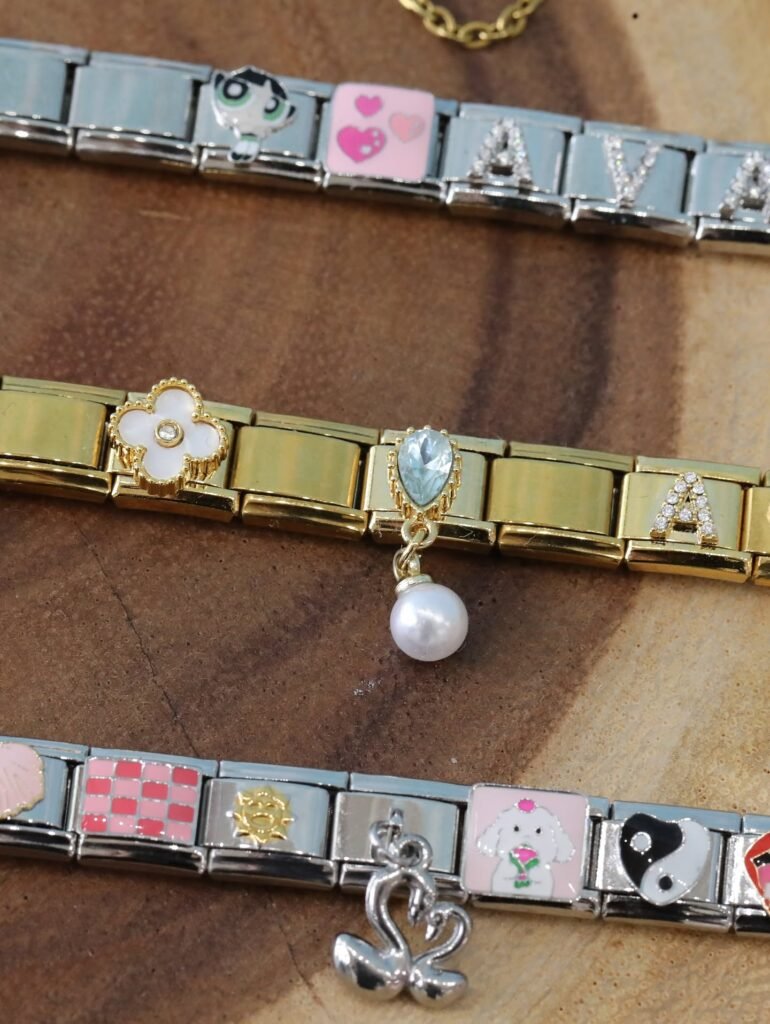
When building a jewelry wardrobe with longevity in mind, prioritizing pieces with genuine personal meaning over pieces that are aesthetically similar but generically purchased produces a collection that remains valuable and relevant to you far longer. The charm bracelet you built yourself or the ring given to mark a specific relationship anniversary will outlast the aesthetically equivalent piece bought on a whim with no narrative behind it.
Editing Your Wardrobe: The Discipline of Letting Go
A jewelry wardrobe that functions well requires editing as much as it requires addition. Pieces that no longer serve you, that no longer reflect who you are or how you dress, or that have been replaced by better options, represent accumulated clutter that makes it harder to find and use the pieces you do value.
The right time to consider releasing a piece from your wardrobe is when it has been unworn for a year without a specific occasion or seasonal reason, when a better option has replaced its function, or when your style has shifted genuinely enough that the piece no longer fits your current expression. Releasing pieces through sale, gift, or donation keeps the wardrobe curated at a size where every piece is visible and accessible rather than buried under items that no longer earn their place.
The exception is pieces of strong personal meaning that are worn rarely or never but carry emotional value that makes them irreplaceable. These pieces exist in a different category from the functional jewelry wardrobe: they are sentimental objects rather than wearable ones, and they should be kept and stored with care rather than edited out. The distinction matters because it prevents sentimentality from clouding the editing of genuinely functional wardrobe decisions.
Frequently Asked Questions
How many pieces of jewelry is the right amount to own?
There is no correct number. The relevant measure is whether each piece you own earns its place through genuine regular use or through a specific irreplaceable function in your wardrobe. A collection of five deeply valued, frequently worn pieces is more functional than a collection of fifty where only five get worn.
Should all jewelry in my wardrobe be the same metal?
Not necessarily, but having a clear dominant metal tone across your foundational daily pieces creates more cohesion than treating all metals as interchangeable. Accents in a secondary metal work well when they are worn separately from the foundational pieces rather than layered with them.
Is it worth investing in permanent jewelry as part of a wardrobe?
For the pieces you want to wear most consistently, permanent jewelry removes the daily decision and creates a stable foundation around which the rest of your jewelry choices are made. For foundational wrist and neck pieces specifically, this is often a good strategic fit.
How do I know if a piece will last in my wardrobe?
The most reliable test is how frequently you reach for it in the first three months of ownership, during which the novelty of a new purchase is highest. Pieces you consistently choose over existing options during this period tend to become genuine long-term wardrobe members. Pieces you skip, even when they are new and novel, are likely to become unworn over time.
When should I let go of a piece from my jewelry wardrobe?
When it has been unworn for a year without a specific reason, when a better option has replaced its function, or when your style has genuinely shifted enough that the piece no longer fits your current expression. Pieces with strong personal meaning are an exception and should be kept regardless of current wearability.
Occasion Dressing With a Curated Wardrobe
One practical test of whether a jewelry wardrobe is genuinely curated is how easily it handles unexpected occasions. If someone invites you to a last-minute dinner at a nice restaurant, a job interview you were not expecting, or a celebration that requires a step up from your daily look, does your jewelry wardrobe have what you need without requiring a new purchase?
A well-curated wardrobe handles most occasions from existing inventory because the pieces within it were chosen for genuine versatility rather than narrow occasion-specific use. The everyday necklace that also works for dinner. The earrings that step up when worn together with your regular pieces. The single standout piece kept specifically for formal contexts that still coheres with the rest of your collection when combined with it.
Building this kind of occasion-readiness into your wardrobe from the beginning means actively considering range of use during every purchase evaluation rather than only considering how a piece looks in the specific context where you are buying it. A bracelet that only works for casual weekend wear costs you something whenever you need a wrist piece for a more formal context. A necklace that only works against one specific neckline requires you to plan outfits around it rather than adapting it to your existing wardrobe. These narrow-use pieces are not necessarily mistakes, but they should be recognized as occasion-specific additions rather than foundational pieces that earn their place through broad daily utility.
Conclusion
A jewelry wardrobe built with intention is worth the deliberate effort it requires because it produces dramatically better outcomes than accumulation: pieces that actually get worn, a collection that reflects who you genuinely are rather than a series of past impulses, and an investment that pays consistent dividends in daily enjoyment rather than sitting unused in a drawer. The discipline of starting from self-knowledge, maintaining clear criteria for addition, investing quality where it matters most, and editing as rigorously as you add is the same discipline that makes any curated collection worth more than the sum of its parts. Applied to jewelry, it produces a wardrobe that you will continue to value more rather than less as time passes.
