

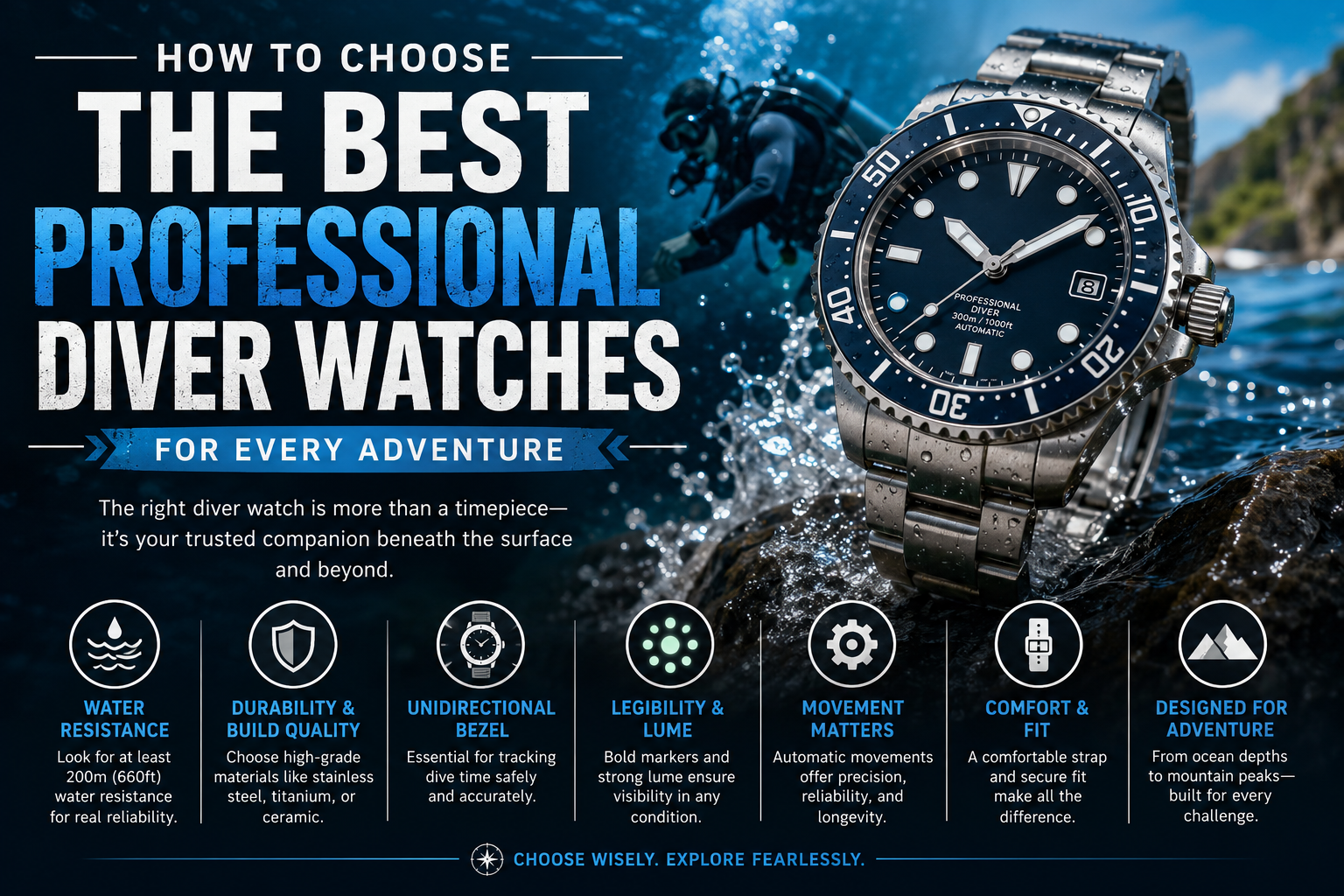
Have you ever found yourself contemplating a selection of spinning dials, not sure which one will hold up under actual diving conditions and not just for some water photos taken in a swimming pool? Selecting the correct professional diver watches is all about picking equipment you can rely on once the pressure is on.
This article gives an overview of the selection criteria, technical details, and trade-offs so that you can find a watch suitable for use not only in Cornish waters but even for wreck diving in Scapa Flow or as everyday office attire. There will also be information on some effective purchasing techniques, such as watch consignment in Belgium.
Understanding Professional Diver Watches and ISO 6425 Standards
True diver watches aren’t just about being water-resistant. According to ISO 6425, the watch of a diver should have the following features: it should be water-resistant at least to 100 metres, readable in the dark from a distance of 25 cm, have a unidirectional rotating timing bezel, not be influenced by magnets up to 4,800 A/m, and not break when hit by a 3 kg plastic hammer with a speed of 4.43 m/s.
It is important since many fashionable watches are labelled with water resistance to 200 metres but haven’t gone through the entire test process. In case you want to purchase a watch that will be used for diving, check the ISO 6425 certification, which can be found on the back or in the documents provided.
How To Match Depth Rating To Your Adventure
Recreational Depths And Everyday Wear
The recreational diving depth limit is normally within the range of 18 metres to 40 metres for most divers. However, a watch capable of withstanding 100 metres will be adequate for ensuring the diver’s safety in case of extended ventures down to these depths. The watch with ratings from 200 metres to 300 metres gives an ample safety margin.
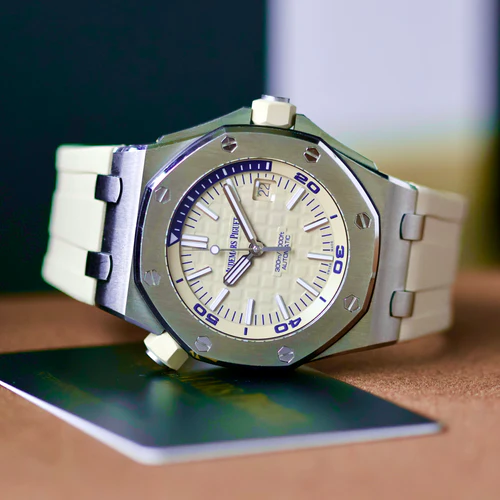
Shop Now: Audemars Piguet Royal Oak Offshore Diver Ref. 15710ST.OO.A085CA.01
Technical Diving and Professional Requirements
In case of the need for performing saturation diving or cave diving, or making dives more than 60 metres deep on a regular basis, opt for a greater range of at least 500 metres, along with a helium valve that can help avoid crystal popping during decompression within the chamber. For saturation divers, the use of titanium housing will reduce the overall weight.
Key Features That Separate Tools From Fashion Pieces
Bezel, Legibility And Lume
The one-way bezel is the fallback timer for you. It must click securely at 60 clicks, align correctly to zero, and be resistant to any inadvertent movement in the backward direction. Visibility under dark conditions is a prerequisite. Lume on the hands, markers, and bezel pip will not fall short.
Case Materials And Crystals
Stainless steel continues to be the material that dominates for durability and repairability. Titanium offers excellent corrosion resistance as well as being about 40% lighter, making it perfect for extended underwater excursions. In terms of crystals, sapphire wins out on scratch resistance, although some tool watches opt for hardened mineral glass for additional impact resistance.
Movements And Power Sources
Automatic movements are preferred due to their durability and lack of need to change batteries, while at the same time offering greater reliability thanks to the fact that they can be wound manually. The solar quartz movement is perfect when it comes to convenience and accuracy, and even more so if you do not dive very frequently.
Sourcing Smartly For Value And Longevity
Where To Source And Consider Watch Consignment In Belgium
New carries with it the full warranty, whereas pre-owned comes with charm and even improved specifications for the same price. It is at such times when the expertise of a trusted professional really pays off. The pre-owned scuba-diving industry in Belgium has evolved to the point that dealers provide certification, pressure tests, and even boxes and papers.
The GMJ Watches brand came into existence in 2019, driven by a fascination with the analysis of markets on a daily basis and procurement from trade fairs. Located in Ghent, the group assists you in purchasing the next watch you need or selling it for you, providing you with free appraisals on the go.
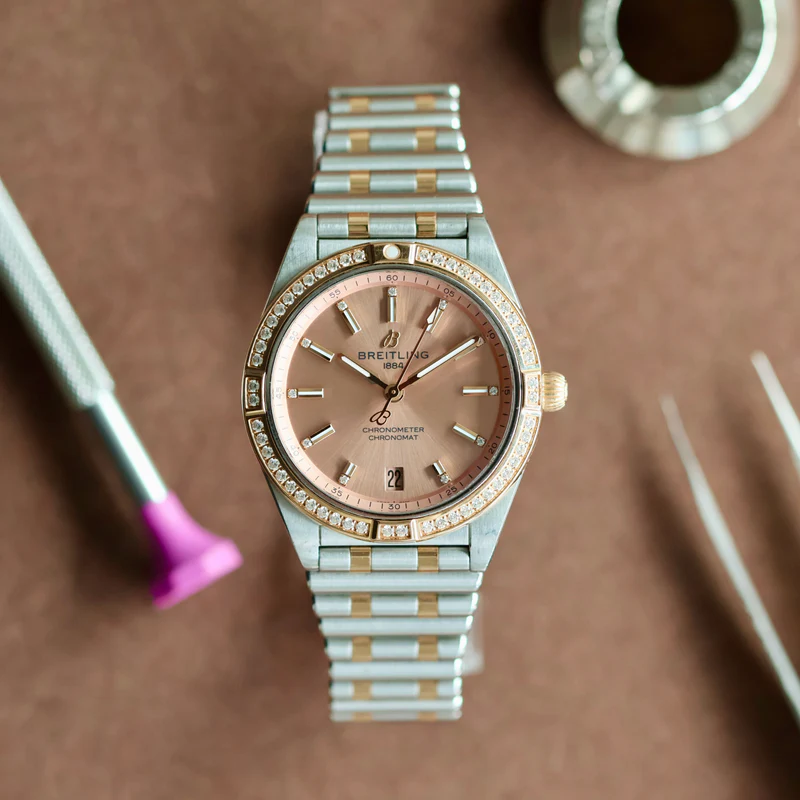
Shop Now: Breitling Chronomat Ladies
Divers looking for value can benefit from opting for watch consignment through a reliable local player, thereby acquiring ISO-tested watches that have undergone servicing and pressure testing.
In a Nutshell
The ideal diver should be the one that you hardly even know you’re wearing until you really need it. Start by looking at ISO 6425 certification, ensuring the depth rating matches your needs, and choose legibility, a reliable bezel, and solid materials. Next, pick out a calibre that suits your preferences, scale to fit your wrist, consider servicing costs, and make sure your source pressure tests and authenticates your watch.
From North Sea dives to just wanting a tough everyday watch, the money you put into pro divers through your research and watch consignment in Belgium will give you performance, security, and value in the long run.
FAQs
1. What makes a watch a true diver rather than just water-resistant?
It should adhere to ISO 6425 standards, which require a minimum waterproofness of 100 metres, readability in the dark at 25 centimetres, a unidirectional rotating bezel, antimagnetism up to 4,800 A/m, and shock resistance, which is tested using a 3-kilogram hammer.
2. Do I need 300 metres for recreational diving?
No, recreational diving seldom goes more than 40 metres deep; hence, 100 metres is the legal limit, while 200 to 300 metres will offer an additional safety measure with stronger seals.
3. Is automatic or solar better for diving?
Both options are viable. The automatic motion provides mechanical strength along with the manual-wind feature, whereas the solar-quartz one ensures precision and minimal maintenance needs. Pick depending on the frequency of using your watch.
