

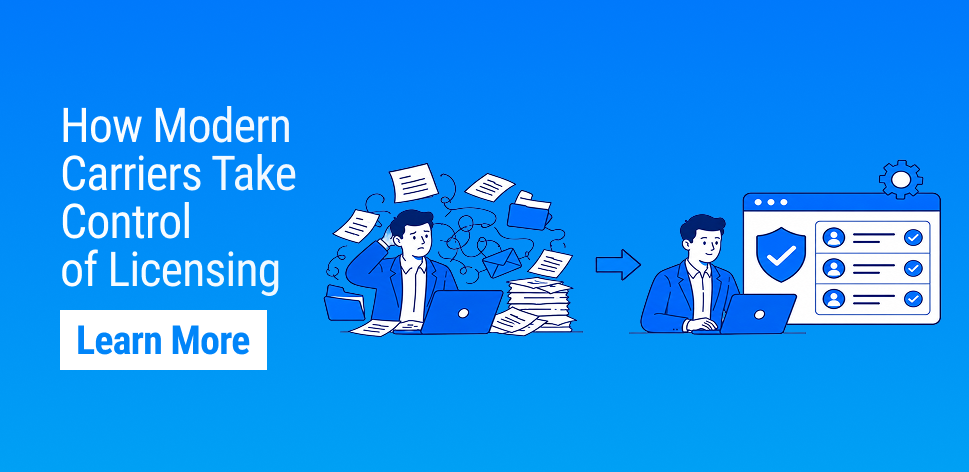
In modern insurance operations, licensing modernization has become a critical requirement for carriers, MGAs, and insurance agencies operating within regulated environments in the United States. Insurance carriers must ensure that every producer is properly licensed, verified, and officially appointed before they can participate in selling insurance products.As insurance organizations expand across multiple states, regulatory complexity increases significantly. Each state has its own licensing rules, renewal cycles, and carrier appointment requirements. Because of this variation, insurance carriers must rely on structured systems that provide centralized control and real-time visibility.Insurance compliance refers to the process of ensuring that all licensing, appointment, and regulatory obligations are met according to state insurance regulations. Without accurate compliance systems, organizations face audit risks, penalties, and operational inefficiencies.
Producer Licensing and Verification in Carrier Workflows
Producer licensing is the process of validating insurance agents and brokers before they are authorized to represent a carrier. Regulatory guidelines require verification through systems such as NIPR to ensure accuracy and compliance.
Before activation, insurance carriers must confirm:
- Active license status
- State-specific eligibility
- Appointment readiness
A carrier appointment is the formal authorization that links a licensed producer to an insurance carrier. Without this approval, the producer cannot legally sell or represent insurance products.
Standard onboarding workflows include:
- License verification through regulatory systems
- State compliance validation
- Carrier appointment assignment
- Producer activation
- System access configuration
These steps must be continuously maintained to ensure regulatory compliance across all operations.
Producer Code Management in Insurance Compliance Systems
A producer code is a unique identifier assigned by insurance carriers to track and manage producers across internal systems. It connects licensing records, carrier appointments, commission structures, and compliance reporting.
Why is producer code management important in insurance operations? Because inconsistent or duplicate codes can lead to reporting errors and compliance failures.
Common challenges include:
- Duplicate producer records across systems
- Outdated or inactive codes
- Misaligned licensing information
- Fragmented data across platforms
Regulatory guidelines require insurance organizations to maintain accurate and auditable producer records. Any mismatch between licensing systems and internal databases can increase compliance risk during audits and regulatory reviews.
In structured environments, producer codes are synchronized with licensing and appointment systems to ensure consistency across insurance operations.

Multi-State Licensing Complexity in US Insurance Industry
Insurance carriers operating across multiple states face increasing regulatory complexity due to different licensing rules, renewal cycles, and appointment requirements.
Regulatory requirements state that carriers must continuously validate producer eligibility across jurisdictions. This includes:
- Active license confirmation
- Valid appointment tracking
- Renewal compliance monitoring
- State-specific authorization checks
Without centralized systems, compliance teams often rely on manual tracking methods such as spreadsheets or disconnected tools. This increases operational inefficiency and compliance exposure.
Common risks include:
- Missed renewals
- Delayed appointment updates
- Incorrect producer status records
- Audit inconsistencies
Insurance organizations must implement structured compliance systems to maintain regulatory alignment in multi-state operations.
Automation in Insurance Compliance Workflows
In modern insurance ecosystems, automation has become essential for managing licensing complexity efficiently. Insurance automation platforms reduce manual effort and improve visibility across compliance operations.
Key automation capabilities include:
- Real-time license verification through NIPR integration
- Automated carrier appointment tracking
- Producer code synchronization across systems
- Renewal alerts and compliance monitoring
- Centralized reporting dashboards
Many insurance carriers and MGAs use insurance compliance software like Agenzee, a producer licensing management system and appointment tracking platform designed to unify compliance workflows.
Agenzee helps insurance organizations connect licensing data, producer management, and carrier appointment tracking into a centralized system. This reduces fragmentation and improves operational consistency.Automation ensures that updates in licensing and appointments are reflected in real time, reducing delays and minimizing compliance gaps.
Operational Benefits for Insurance Carriers and MGAs
Insurance carriers and MGAs benefit significantly from structured licensing modernization. When compliance systems are automated, organizations gain better visibility and stronger control over producer data.
Key operational improvements include:
- Faster onboarding of insurance producers
- Reduced manual compliance workload
- Improved data consistency across systems
- Lower regulatory risk exposure
- Stronger audit readiness and reporting capability
Insurance organizations must manage large-scale producer networks while maintaining strict regulatory compliance. Without automation, scaling operations becomes increasingly difficult and error-prone.
Conclusion: Building a Scalable Compliance Framework
Insurance licensing modernization is essential for maintaining regulatory stability and operational efficiency in the United States insurance industry. As carriers expand across multiple states, managing producer licensing, carrier appointments, and producer codes becomes increasingly complex.Modern compliance systems solve these challenges through automation, centralized data management, and real-time validation. Insurance organizations must transition from manual workflows to structured compliance frameworks to ensure long-term accuracy and scalability.Platforms like Agenzee, an insurance compliance software and producer licensing management system, enable carriers to manage licensing workflows, appointment tracking, and producer code synchronization in a unified environment.In regulated insurance ecosystems, automation is now a foundational requirement for maintaining compliance integrity and operational control.
