

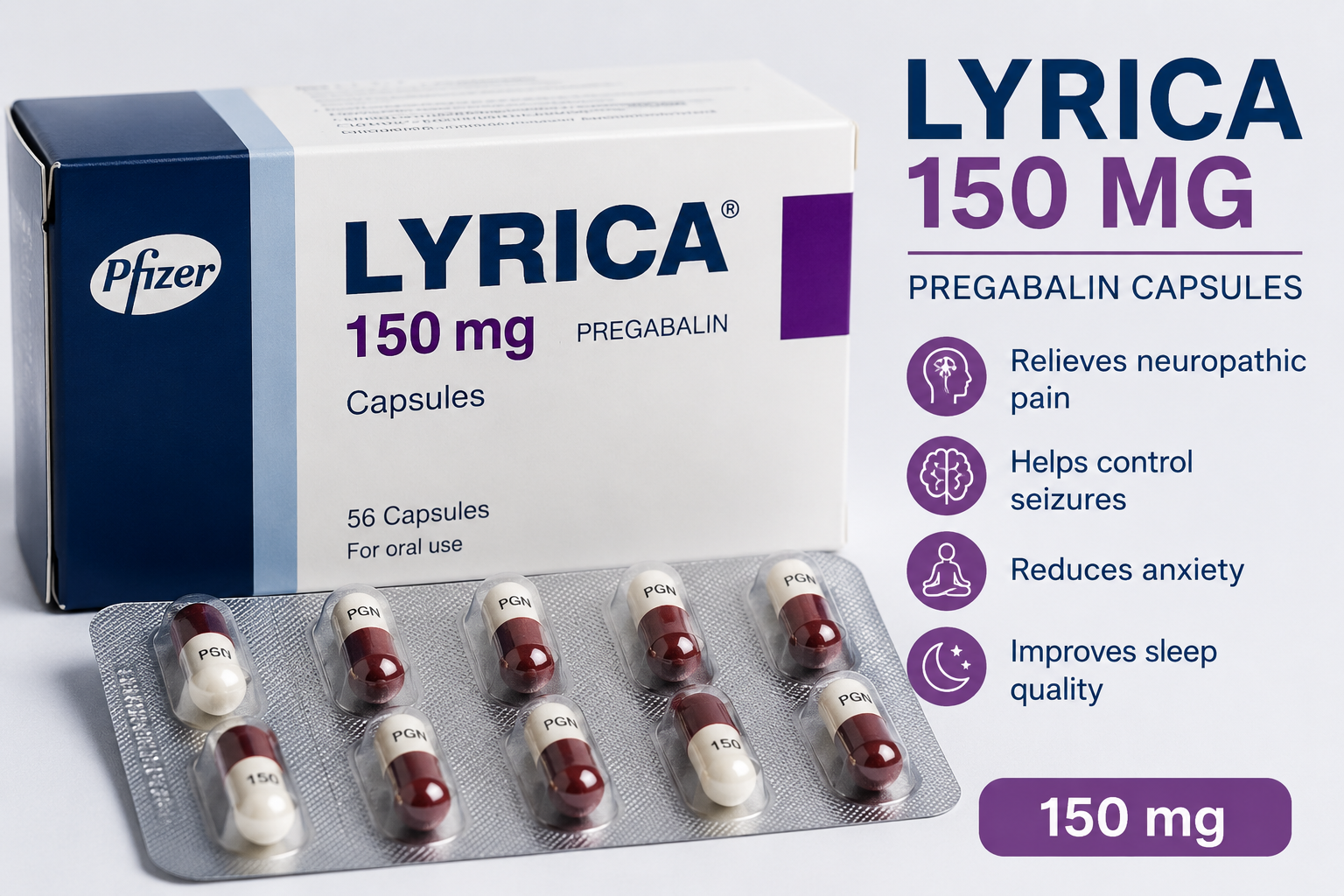
Nerve pain, also known as neuropathic pain or neuropathy, is a chronic condition that affects millions of people worldwide. Unlike ordinary pain caused by injuries or inflammation, nerve pain occurs when the nerves themselves become damaged or dysfunctional. This condition can create sensations such as burning, tingling, stabbing pain, numbness, or electric shock-like feelings. One of the most commonly prescribed medications for treating nerve pain is Lyrica 150mg.
Doctors often recommend Lyrica 150mg because it helps calm overactive nerves and provides relief from persistent discomfort. This article explains how Lyrica works, its benefits, dosage, side effects, precautions, and why it is considered an effective treatment for neuropathy.
What Is Lyrica 150mg?
Lyrica is the brand name for pregabalin, a prescription medication used to treat neurological conditions. It belongs to a class of drugs known as anticonvulsants or nerve pain medications. Although originally developed to control seizures, researchers discovered that pregabalin is highly effective in reducing nerve-related pain.
Lyrica 150mg is commonly prescribed for:
- Diabetic neuropathy
- Postherpetic neuralgia (pain after shingles)
- Fibromyalgia
- Spinal cord injury nerve pain
- Peripheral neuropathy
- Anxiety disorders in some cases
- Partial seizures
Among these uses, neuropathic pain treatment remains one of the most important reasons doctors prescribe Lyrica.
Understanding Neuropathy
Neuropathy occurs when nerves are damaged due to disease, injury, infection, or other medical conditions. Damaged nerves send abnormal signals to the brain, causing chronic pain even without an obvious physical injury.
Common causes of neuropathy include:
- Diabetes
- Chemotherapy
- Alcohol abuse
- Vitamin deficiencies
- Autoimmune disorders
- Infections
- Shingles
- Physical trauma
Symptoms of nerve pain may include:
- Burning sensations
- Tingling or “pins and needles”
- Sharp shooting pain
- Muscle weakness
- Sensitivity to touch
- Numbness in hands or feet
These symptoms can severely affect sleep, mobility, mood, and overall quality of life.
How Lyrica 150mg Works for Nerve Pain
The active ingredient pregabalin works by targeting overactive nerve signals in the brain and nervous system. Nerve damage causes excessive electrical activity, leading to constant pain signals. Lyrica helps reduce these signals and calms the nervous system.
Pregabalin binds to calcium channels in nerve cells. This action decreases the release of certain neurotransmitters responsible for pain transmission. As a result, the brain receives fewer pain signals, helping patients feel relief from chronic nerve discomfort.
Unlike standard painkillers such as ibuprofen or paracetamol, Lyrica specifically targets nerve-related pain rather than inflammation. This makes it more effective for neuropathy.
Benefits of Lyrica 150mg for Neuropathy
Effective Pain Relief
One of the biggest advantages of Lyrica is its ability to reduce moderate to severe nerve pain. Many patients experience noticeable relief within the first week of treatment.
Improved Sleep
Neuropathic pain often worsens at night and interferes with sleep. Lyrica has calming effects that help patients sleep better and wake up feeling more rested.
Reduced Tingling and Burning
Patients commonly report reduced burning sensations, numbness, and tingling after taking Lyrica regularly.
Better Daily Functioning
By controlling pain symptoms, Lyrica allows individuals to perform daily activities more comfortably. Walking, working, and exercising become easier.
Long-Term Management
Lyrica can be used as part of a long-term treatment plan for chronic neuropathic pain under medical supervision.
Recommended Dosage of Lyrica 150mg
The dosage of Lyrica varies depending on the patient’s condition and severity of symptoms. Doctors often start with a lower dose and gradually increase it to minimize side effects.
For neuropathic pain, Lyrica 150mg may be prescribed:
- Once daily
- Twice daily in divided doses
- Alongside other medications
Patients should always follow their doctor’s instructions carefully. Do not increase or decrease the dose without medical advice.
How to Take Lyrica
- Swallow the capsule with water
- Can be taken with or without food
- Take at the same time daily
- Do not crush or chew capsules
Consistency is important because missing doses may reduce effectiveness.
How Quickly Does Lyrica Work?
Some people notice improvement within a few days, while others may require several weeks for full benefits. Pain reduction usually becomes more noticeable after regular use.
Factors affecting response time include:
- Severity of nerve damage
- Age
- Overall health
- Other medications
- Dosage strength
Patients should continue taking the medication as prescribed even if immediate results are not seen.
Possible Side Effects of Lyrica 150mg
Like all medications, Lyrica may cause side effects in some users. Most side effects are mild and improve as the body adjusts.
Common side effects include:
- Dizziness
- Drowsiness
- Dry mouth
- Blurred vision
- Weight gain
- Swelling in hands or feet
- Fatigue
Less common but serious side effects may include:
- Mood changes
- Depression
- Allergic reactions
- Breathing difficulties
- Suicidal thoughts
Patients experiencing severe symptoms should seek medical attention immediately.
Safety Precautions
Before taking Lyrica, patients should inform their doctor about their medical history and current medications.
Avoid Alcohol
Alcohol can increase dizziness and drowsiness caused by Lyrica.
Kidney Problems
Pregabalin is removed through the kidneys, so dosage adjustments may be needed in patients with kidney disease.
Pregnancy and Breastfeeding
Women who are pregnant or breastfeeding should consult their doctor before using Lyrica.
Driving and Machinery
Because Lyrica may cause drowsiness or blurred vision, patients should avoid driving or operating heavy machinery until they know how the medication affects them.
Can Lyrica Be Addictive?
Lyrica has some potential for dependence if misused or taken in high doses without medical supervision. However, when used correctly under a doctor’s guidance, it is generally considered safe and effective.
Patients should never stop taking Lyrica suddenly because withdrawal symptoms can occur. Doctors usually reduce the dosage gradually when discontinuing treatment.
Lifestyle Tips to Support Neuropathy Treatment
While Lyrica helps manage nerve pain, combining medication with healthy habits can improve results significantly.
Maintain Blood Sugar Levels
For diabetic neuropathy, controlling blood sugar is essential to prevent further nerve damage.
Exercise Regularly
Gentle physical activity improves circulation and nerve health.
Eat a Balanced Diet
Foods rich in vitamins B12 and antioxidants support nerve function.
Avoid Smoking
Smoking reduces blood flow to nerves and may worsen symptoms.
Manage Stress
Stress can intensify pain perception. Relaxation techniques like yoga and meditation may help.
Who Should Avoid Lyrica?
Lyrica may not be suitable for everyone. People with the following conditions should use caution:
- Severe kidney disease
- History of substance abuse
- Serious heart problems
- Allergies to pregabalin
Always discuss risks and benefits with a healthcare provider before starting treatment.
Why Doctors Prescribe Lyrica for Neuropathy
Healthcare professionals frequently prescribe Lyrica because clinical studies have shown strong effectiveness in treating neuropathic pain. Compared to traditional painkillers, pregabalin directly targets nerve dysfunction, offering better relief for chronic conditions.
Its ability to improve sleep, reduce anxiety related to chronic pain, and enhance quality of life makes it a preferred option for many patients.
Conclusion
Neuropathy can significantly affect daily life by causing chronic burning, tingling, and stabbing pain. Fortunately, Lyrica 150mg has become one of the most trusted medications for managing nerve pain effectively. By calming overactive nerves and reducing abnormal pain signals, Lyrica helps patients experience relief and regain comfort in their daily routines.
Although the medication offers many benefits, it should only be used under medical supervision. Proper dosage, regular monitoring, and healthy lifestyle habits can help maximize results while minimizing side effects.
If you are struggling with neuropathic pain, consult a healthcare professional to determine whether Lyrica 150mg may be the right treatment option for your condition.
