

The internet has made it easier than ever to shop, communicate, and access information. However, it has also created opportunities for scammers to target unsuspecting users through fake websites, fraudulent online stores, and phishing pages. Every day, thousands of people lose money or compromise their personal information because they trust websites without properly verifying their legitimacy.
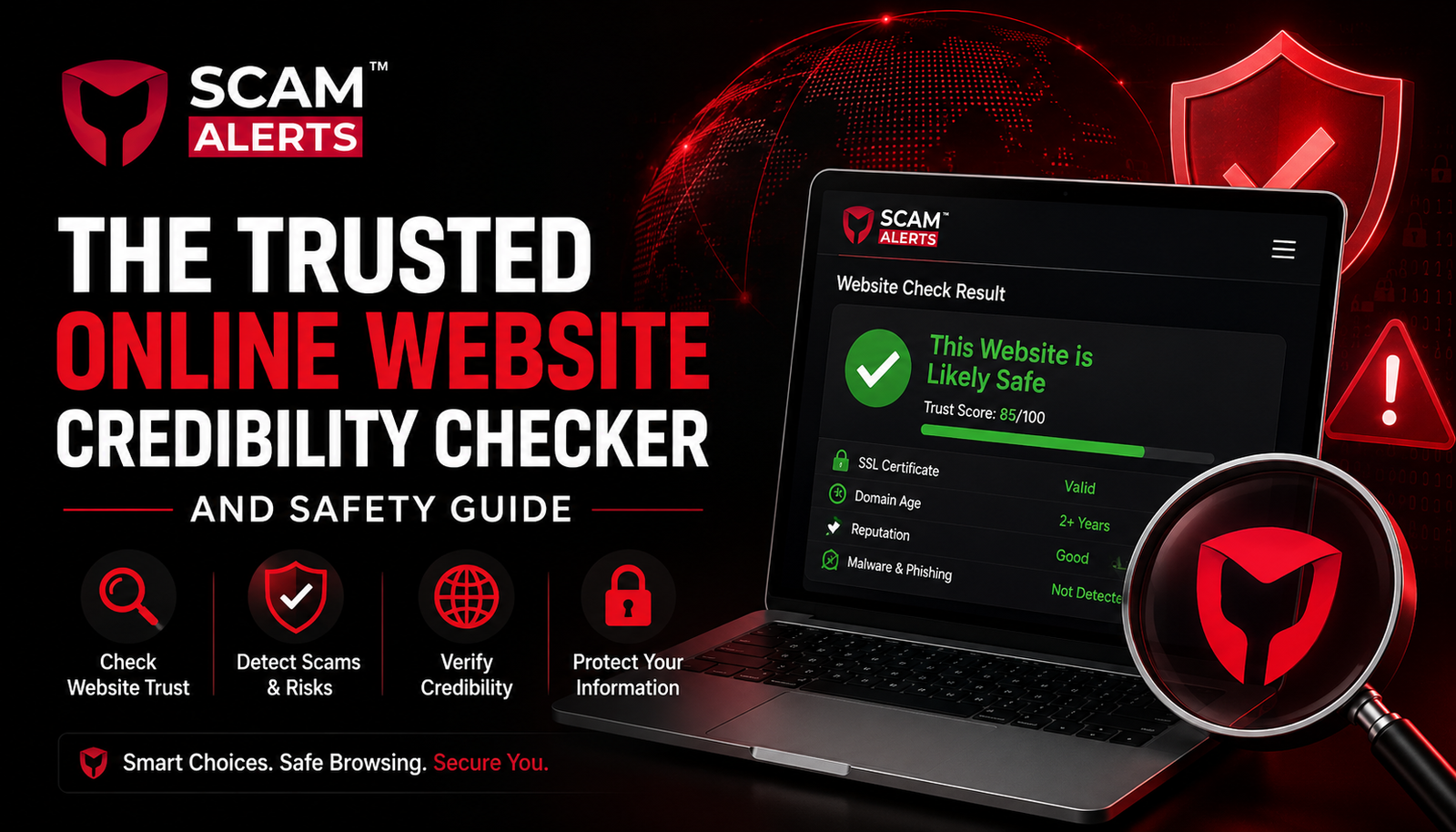
This is where Scam Alerts comes in. As a trusted website scam checker and online safety platform, Scam Alerts helps users determine whether a website is legitimate before interacting with it. By providing trust scores, complete website reviews, WHOIS details, and website safety insights, Scam Alerts empowers users to make informed decisions and stay protected online.
In this guide, we will explore how website scam detection works, why website credibility matters, and how Scam Alerts can help you browse the internet with confidence.
Why Website Credibility Matters
Many internet users assume that a professional-looking website is trustworthy. Unfortunately, scammers have become increasingly sophisticated and can create convincing websites that closely resemble legitimate businesses.
A fraudulent website can:
- Steal personal information
- Collect payment details
- Distribute malware
- Conduct phishing attacks
- Sell counterfeit products
- Disappear after receiving payments
Before making a purchase or sharing sensitive information, it is essential to verify a website’s legitimacy. A reliable website credibility checker can significantly reduce your risk of becoming a victim of online fraud.
What Is Scam Alerts?
Scam Alerts is an advanced website scam checker designed to help users evaluate the safety and trustworthiness of websites. The platform analyzes multiple factors to provide a comprehensive website review, helping users identify potential risks before engaging with a website.
Whether you are shopping online, researching a company, or verifying a newly discovered website, Scam Alerts provides valuable insights that support safer online decisions.
The platform combines technology, data analysis, and website verification methods to deliver a detailed trust assessment that is easy for anyone to understand.
Key Features of Scam Alerts
1. Website Scam Checker
The website scam checker is one of the most valuable features offered by Scam Alerts. It examines various trust indicators to identify suspicious patterns commonly associated with fraudulent websites.
The checker analyzes:
- Website age
- Security certificates
- Domain registration details
- Hosting information
- User-reported concerns
- Technical website indicators
This process helps users quickly determine whether a website deserves further investigation.
2. Scam Detector Technology
Modern online scams continue to evolve, making manual verification difficult for many users. Scam Alerts uses advanced scam detection methods to identify warning signs that may indicate fraudulent activity.
The scam detector helps users recognize:
- Newly created websites
- Hidden ownership information
- Suspicious domain registrations
- High-risk website behaviors
- Potential phishing attempts
These insights can help prevent costly mistakes and improve online security.
3. Trust Score Evaluation
A trust score is a simple way to assess website credibility. Scam Alerts generates a trust score based on multiple data points and verification factors.
A higher trust score generally indicates stronger credibility signals, while a lower score may suggest caution.
Trust scores allow users to quickly evaluate websites without needing extensive technical knowledge.
4. Complete Website Review
Scam Alerts provides a complete website review that goes beyond basic safety checks.
The review may include:
- Domain information
- Website security status
- Registration history
- Technical indicators
- Website reputation insights
- Credibility assessment
This comprehensive approach gives users a clearer picture of a website’s overall trustworthiness.
5. WHOIS Details Lookup
WHOIS details provide valuable information about a website’s domain registration.
Scam Alerts helps users access important WHOIS information such as:
- Domain creation date
- Registration status
- Registrar information
- Domain expiration date
- Registration history
Analyzing WHOIS details can reveal important clues about a website’s legitimacy and operational history.
Common Signs of Scam Websites
Understanding the warning signs of fraudulent websites is essential for online safety.
Poor Website Design
Although not always the case, scam websites often contain:
- Broken links
- Poor grammar
- Low-quality images
- Inconsistent branding
These issues can indicate a lack of professionalism or a quickly assembled fraudulent website.
Unrealistic Offers
If a deal seems too good to be true, it probably is.
Be cautious of websites offering:
- Massive discounts
- Luxury products at extremely low prices
- Limited-time offers designed to create urgency
Scammers frequently use these tactics to pressure users into making quick decisions.
Lack of Contact Information
Legitimate businesses usually provide clear contact details.
Warning signs include:
- No phone number
- No physical address
- Generic email addresses
- Limited customer support options
Always verify that a business can be contacted through legitimate channels.
Newly Registered Domains
Many scam websites operate for a short period before disappearing.
Checking domain age through WHOIS details can reveal whether a website was created recently. While new websites are not automatically scams, newly registered domains deserve additional scrutiny.
Missing Security Features
Before entering personal information, verify that the website uses secure connections.
Look for:
- HTTPS encryption
- Valid SSL certificates
- Secure payment methods
These indicators contribute to better website safety.
How Scam Alerts Help Protect Users
Scam Alerts simplifies website verification by bringing multiple credibility indicators together in one place.
Instead of manually checking domain records, security certificates, and website reputation data, users can access a complete website review within seconds.
Benefits include:
- Faster website verification
- Improved online safety
- Reduced fraud risk
- Better decision-making
- Greater confidence when browsing
This streamlined process makes Scam Alerts useful for both everyday users and businesses.
Who Can Benefit from Scam Alerts?
Online Shoppers
Before purchasing products from unfamiliar online stores, shoppers can use Scam Alerts to verify website legitimacy and reduce fraud risks.
Business Owners
Businesses can evaluate potential partners, suppliers, and service providers before establishing professional relationships.
Freelancers
Freelancers often work with clients worldwide. Website verification helps confirm the credibility of new clients and project opportunities.
Researchers
Researchers and journalists can use Scam Alerts to investigate websites and assess source credibility.
Everyday Internet Users
Anyone who uses the internet can benefit from additional website safety insights and scam detection tools.
Best Practices for Staying Safe Online
While Scam Alerts provides valuable protection, users should also follow general cybersecurity best practices.
Verify Before Trusting
Always research unfamiliar websites before sharing information or making purchases.
Use Strong Passwords
Create unique passwords for every online account and enable multi-factor authentication whenever possible.
Avoid Suspicious Links
Do not click links from unknown emails, messages, or social media posts without verifying their authenticity.
Keep Software Updated
Regular updates help protect devices from security vulnerabilities and malware threats.
Monitor Financial Activity
Review bank statements and online transactions regularly to identify suspicious activity quickly.
Why Choose Scam Alerts?
Scam Alerts stands out because it combines website scam detection, trust score analysis, WHOIS details, and complete website reviews into one easy-to-use platform.
The platform is designed for users who want quick, reliable, and understandable website safety information without requiring technical expertise.
By helping users identify risks before they become problems, Scam Alerts supports safer internet usage and smarter online decisions.
Conclusion
As online scams continue to grow, website verification has become more important than ever. Trusting an unfamiliar website without proper research can expose users to financial loss, identity theft, and security risks.
Scam Alerts provides a powerful solution through its website scam checker, scam detector technology, trust score system, complete website reviews, and WHOIS details analysis. These tools help users evaluate website legitimacy and improve website safety before interacting with online platforms.
Whether you are shopping online, researching a business, or simply browsing the web, Scam Alerts offers the insights needed to stay informed, avoid scams, and navigate the internet with confidence.
