

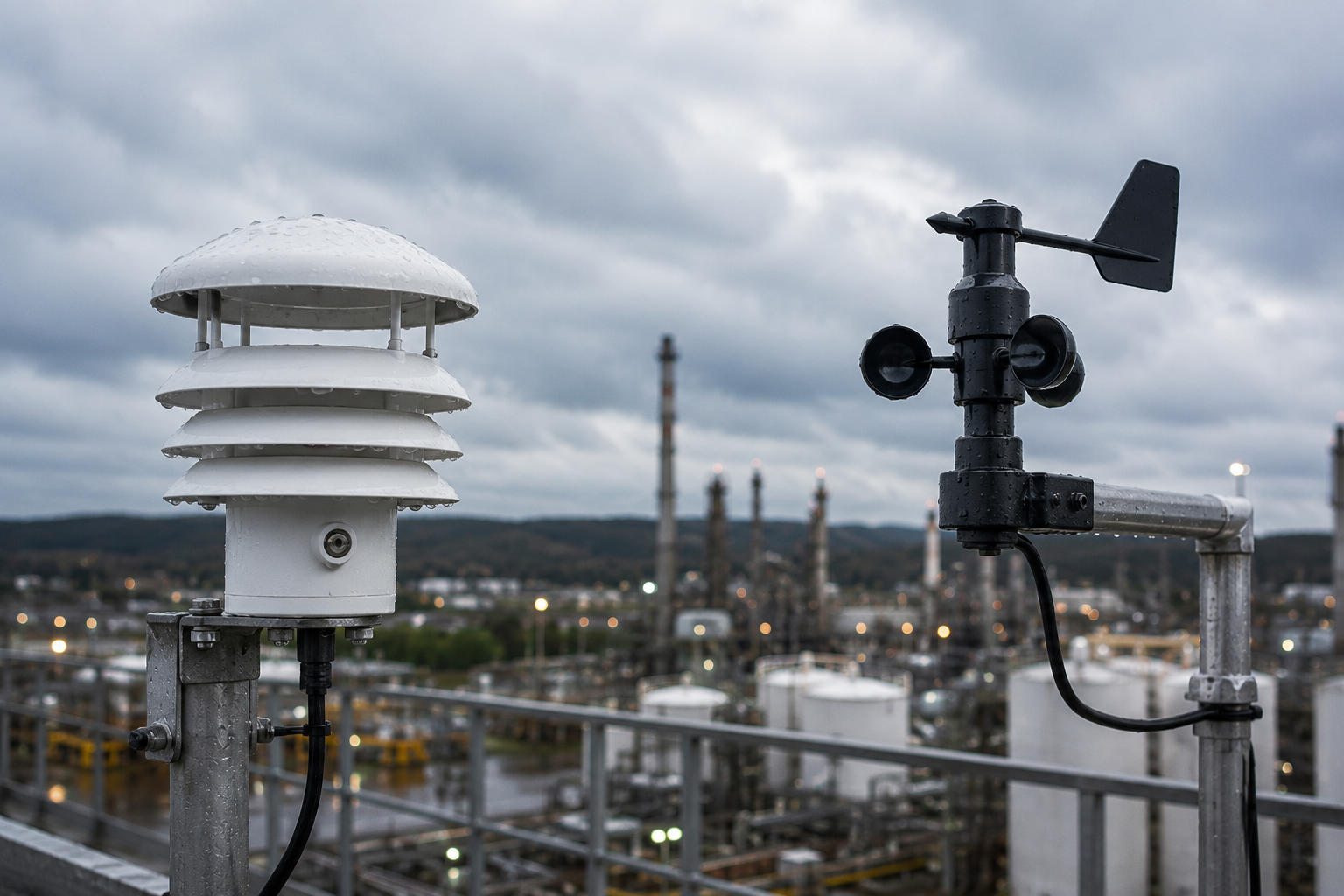
A weather monitoring system that delivers inconsistent data can create challenges long before a problem becomes obvious. Inaccurate wind measurements may affect operational planning, maintenance schedules, and automated system responses. For procurement teams, selecting the right weather sensor involves balancing reliability, maintenance requirements, environmental conditions, and long-term operational goals.
One of the most common decisions involves choosing between mechanical and ultrasonic weather stations and sensors. Both technologies provide valuable environmental data, but they achieve this in different ways. Understanding the strengths and limitations of each option helps organizations select a solution that aligns with operational priorities and site conditions.
Quick Comparison
| Feature | Ultrasonic Weather Sensors | Mechanical Weather Sensors |
| Moving Parts | No moving parts | Uses rotating cups and vanes |
| Maintenance Requirements | Lower routine maintenance requirements | Requires periodic inspection and servicing |
| Performance in Changing Conditions | Consistent performance during changing weather conditions | Performance can be influenced by component wear over time |
| Accessibility Needs | Suitable for remote or difficult-to-access locations | Better suited to locations with easier maintenance access |
| Technology Type | Solid-state sensing technology | Traditional mechanical measurement technology |
| Power Requirements | Typically requires greater electrical support | Can be suitable for applications with tighter power constraints |
| Industry Adoption | Increasingly used in modern monitoring systems | Widely used across existing monitoring infrastructure |
| Operation | Electronic measurement using sound waves | Physical measurement through moving components |
Understanding How the Technologies Differ
The primary difference between ultrasonic and mechanical weather sensors lies in how they measure wind.
Mechanical sensors typically use rotating cups to measure wind speed and a vane to determine wind direction. As the wind moves the cups and vane, the system converts that movement into measurable data.
Ultrasonic weather stations and sensors use sound waves instead of moving components. By measuring how wind affects the travel time of ultrasonic pulses, the sensor calculates wind speed and direction electronically.
Because the measurement methods differ, maintenance requirements, reliability characteristics, and environmental performance also vary.
Performance in Industrial Environments
Wind Measurement Response
Reliable environmental monitoring depends on consistent data collection. Mechanical sensors provide dependable measurements across many applications and have supported industrial monitoring programs for decades.
However, moving parts must be physically moved before measurements can be recorded. In rapidly changing conditions, rotational components must accelerate and decelerate as the wind shifts.
Ultrasonic systems measure airflow without relying on physical movement. This allows them to capture changes in wind conditions without concerns related to bearing wear or rotational resistance.
For facilities with frequently changing environmental conditions, measurement consistency is often an important consideration during procurement.
Data Quality and Operational Visibility
Environmental monitoring systems support operational decisions across industries. Building automation systems, infrastructure monitoring platforms, renewable energy facilities, and industrial sites all rely on accurate weather information.
Both sensor types provide useful wind data. The best ultrasonic weather station eliminates variables associated with moving parts, helping maintain measurement consistency over extended operating periods.
Mechanical systems can continue to perform effectively when properly maintained, but regular inspection remains important for long-term accuracy.
Maintenance Considerations for Ultrasonic Weather Sensors
Maintenance planning plays a major role in weather sensor selection.
Mechanical weather sensors contain components that may require inspection, cleaning, lubrication, or replacement during their service life. Bearings, shafts, and rotating assemblies can experience wear after prolonged exposure to environmental conditions.
This does not make mechanical technology unsuitable. In many applications, routine servicing is manageable and aligns well with existing maintenance programs.
Ultrasonic weather sensors remove many of these service requirements because they operate without moving parts.
Maintenance Comparison
| Maintenance Factor | Ultrasonic Sensors | Mechanical Sensors |
| Moving components | None | Present |
| Bearing inspections | Not required | May be required |
| Wear-related servicing | Reduced | Periodic servicing may be needed |
| Access requirements | Often less frequent | May require routine inspection |
| Long-term maintenance planning | Simplified in many applications | Depends on operating conditions |
For facilities with remote installations or limited maintenance access, reducing service requirements may support operational efficiency.
Integration with Monitoring and Control Systems
Weather monitoring data rarely operates in isolation. Most facilities integrate environmental data into larger operational platforms.
Examples include:
- Building automation systems
- Environmental monitoring networks
- Renewable energy facilities
- Industrial process controls
- Infrastructure management platforms
When evaluating weather sensors, organizations should consider:
- Communication protocols
- Data output formats
- System compatibility
- Monitoring software requirements
- Future expansion plans
Both ultrasonic and mechanical sensors can integrate successfully into industrial systems when selected according to operational needs.
Choosing the Right Weather Sensor for Operational Goals
The decision between ultrasonic and mechanical technology should be based on practical operational requirements rather than a single performance characteristic.
Ultrasonic Sensors May Be Appropriate When:
- Maintenance access is limited
- Continuous monitoring is required
- Long-term service reduction is a priority
- Environmental conditions create wear concerns
Mechanical Sensors May Be Appropriate When:
- Existing infrastructure already supports the technology
- Routine maintenance programs are established
- Power constraints influence equipment selection
- Operational requirements align with traditional monitoring approaches
Evaluating maintenance resources, environmental exposure, integration requirements, and lifecycle expectations helps support a more informed procurement decision.
Final Considerations for Weather Sensor Selection
Both ultrasonic and mechanical weather sensors continue to play important roles in industrial monitoring applications. Mechanical systems remain widely used and provide reliable environmental data when properly maintained. Ultrasonic technology offers an alternative approach that reduces reliance on moving components and can simplify long-term maintenance planning.
The best choice depends on operational priorities, environmental conditions, infrastructure requirements, and maintenance expectations. Facilities that carefully evaluate these factors are better positioned to select a weather monitoring solution that supports reliable performance over time.
Organizations evaluating weather-monitoring technologies can contact Comptus to review available solutions and identify options that align with their specific operational and environmental requirements.
