

Picture your team juggling five different apps just to finish one client call: a phone system for dialing out, a separate app for video, Slack for chat, email for follow-ups, and a fax line nobody remembers setting up. Sound familiar? That’s the exact problem Unified communications as a service was built to solve.
By 2026, UCaaS has moved from “nice to have” to the backbone of how modern businesses actually talk to each other, both internally and with customers. If you’re still running on legacy PBX hardware or stitching together disconnected tools, this guide breaks down what UCaaS is, how it works, and why so many companies are making the switch this year.
What Does UCaaS Actually Mean?
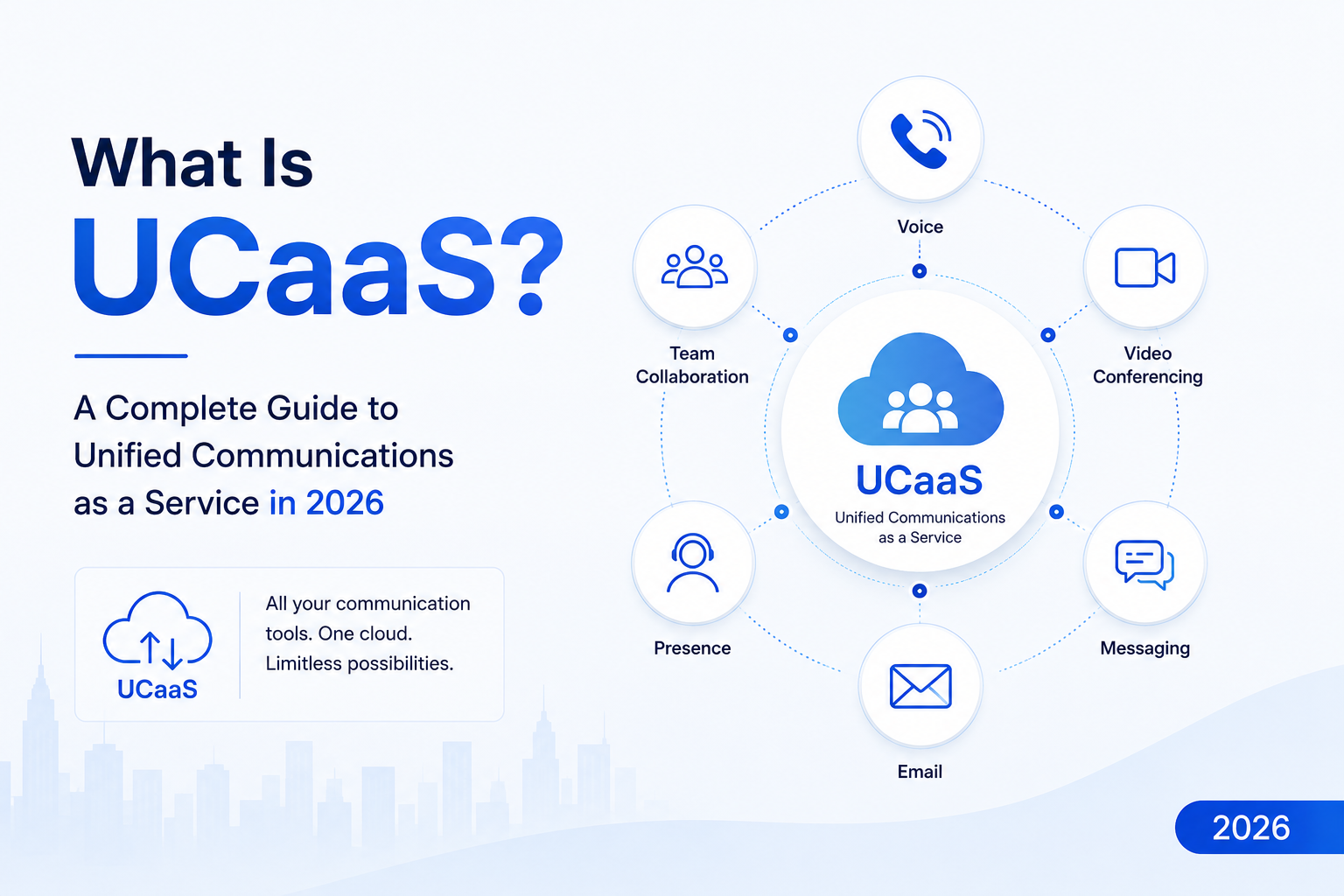
UCaaS stands for Unified Communications as a Service. In plain terms, it’s a cloud-based platform that bundles voice calling, video conferencing, messaging, file sharing, and team collaboration into one system. Instead of buying and maintaining separate hardware for each channel, you subscribe to a service and access everything through an app, browser, or desk phone connected to the cloud.
Think of it like the difference between owning a car and using a rideshare app. With traditional phone systems, you own (and maintain) the equipment. With UCaaS, you just use what you need, when you need it, and someone else handles the engine under the hood.
The “as a service” part matters. It means updates, security patches, and scaling all happen on the provider’s end. Your IT team isn’t stuck troubleshooting a server rack in a closet somewhere.
The Core Components of a UCaaS Platform
Most UCaaS platforms bundle together a handful of communication tools that used to live in separate silos:
Voice calling. Cloud-hosted VoIP replaces the traditional desk phone system, letting employees make and receive calls from any device.
Video conferencing. Built-in meeting tools handle everything from quick check-ins to full client presentations, no third-party software required.
Team messaging. Instant chat, group channels, and file sharing keep quick conversations out of your inbox.
Presence and status. You can see at a glance whether a colleague is available, on a call, or away, which cuts down on the “are you free?” email chains.
Mobility features. Because everything runs through the cloud, employees can pick up a call on their laptop and finish it on their phone without missing a beat.
Some providers add contact center features, SMS/MMS, fax-to-email, and analytics dashboards on top. The exact mix varies, but the goal stays consistent: fewer tools, one login, less friction.
Why Businesses Are Switching to UCaaS in 2026
A few forces are driving the shift this year, and they’re not just about convenience.
Hybrid work isn’t going anywhere. Teams are split across home offices, coworking spaces, and headquarters. A cloud communication system means everyone has the same tools regardless of location, so nobody’s left out of the loop because they’re not physically at a desk.
Cost predictability matters more than ever. On-premise phone systems come with unpredictable maintenance costs, hardware refreshes, and licensing fees that pile up. UCaaS runs on a subscription model, which makes budgeting far more straightforward.
Scaling is instant. Need to add ten new hires next month? With a legacy system, that might mean new phone lines and hardware orders. With UCaaS, it’s a few clicks in an admin portal.
Integration expectations have gone up. Employees expect their communication tools to work with the software they already use every day, project management platforms, CRMs, and especially collaboration hubs like Microsoft Teams.
That last point deserves its own spotlight, because it’s become one of the biggest deciding factors for businesses choosing a provider.
Why Microsoft Teams Integration Is a Game-Changer
Millions of businesses already live inside Microsoft Teams for chat, meetings, and file collaboration. The problem is that Teams, on its own, isn’t a full replacement for enterprise-grade calling. That’s where microsoft teams integration comes in.
By connecting a UCaaS platform directly to Teams, businesses get enterprise voice calling, external PSTN connectivity, and advanced call routing, all without leaving the Teams interface employees already use daily. There’s no need to train staff on a new app or force them to switch between windows mid-conversation.
This kind of integration also solves a common headache for IT departments: managing multiple vendor relationships. Instead of running Teams for collaboration and a separate telecom provider for calling, everything routes through a single, unified backend. Fewer moving parts means fewer things that can break.
How to Choose the Right UCaaS Provider
Not all UCaaS platforms are built the same, and picking one shouldn’t come down to price alone. A few things worth checking before you sign a contract:
Reliability and uptime guarantees. Look for a provider that publishes clear SLAs (service level agreements), not vague promises.
Security certifications. Encryption, compliance standards, and data protection policies should be documented, not just mentioned in a sales call.
Integration depth. Does the platform genuinely integrate with tools your team already relies on, or does it just offer a surface-level connection?
Support quality. When something breaks at 2 PM on a Tuesday, you want a provider that answers the phone (ironic, but true) rather than a chatbot loop.
Migration support. Switching communication systems is a big move. A good provider walks you through onboarding rather than handing you a login and wishing you luck.
What This Looks Like in Practice
Say a 200-person company is running separate systems for calling, video, and chat, plus a Teams license nobody’s fully utilizing. After moving to a unified platform, employees make client calls directly from Teams, video meetings happen without switching apps, and IT manages one vendor instead of three. Support tickets related to communication tools typically drop, and onboarding new hires becomes a matter of assigning a license rather than provisioning hardware.
That’s the practical value of UCaaS: less friction, fewer vendors, and a communication stack that actually keeps up with how people work today.
Getting Started
If your business is still patching together separate tools for calling, messaging, and video, 2026 is a reasonable year to make the change. The technology has matured, integrations with platforms like Microsoft Teams have gotten far more sophisticated, and the cost of staying on outdated systems keeps climbing.
Providers like Omnicaas specialize in helping businesses transition to unified communications without the usual headaches, offering platforms built around reliability, security, and the integrations modern teams actually use. Whether you’re evaluating UCaaS for the first time or looking to replace an underperforming provider, understanding these fundamentals puts you in a stronger position to make the right call.
The businesses that get ahead this year won’t be the ones with the most communication tools. They’ll be the ones with the fewest tools that actually work together.
