

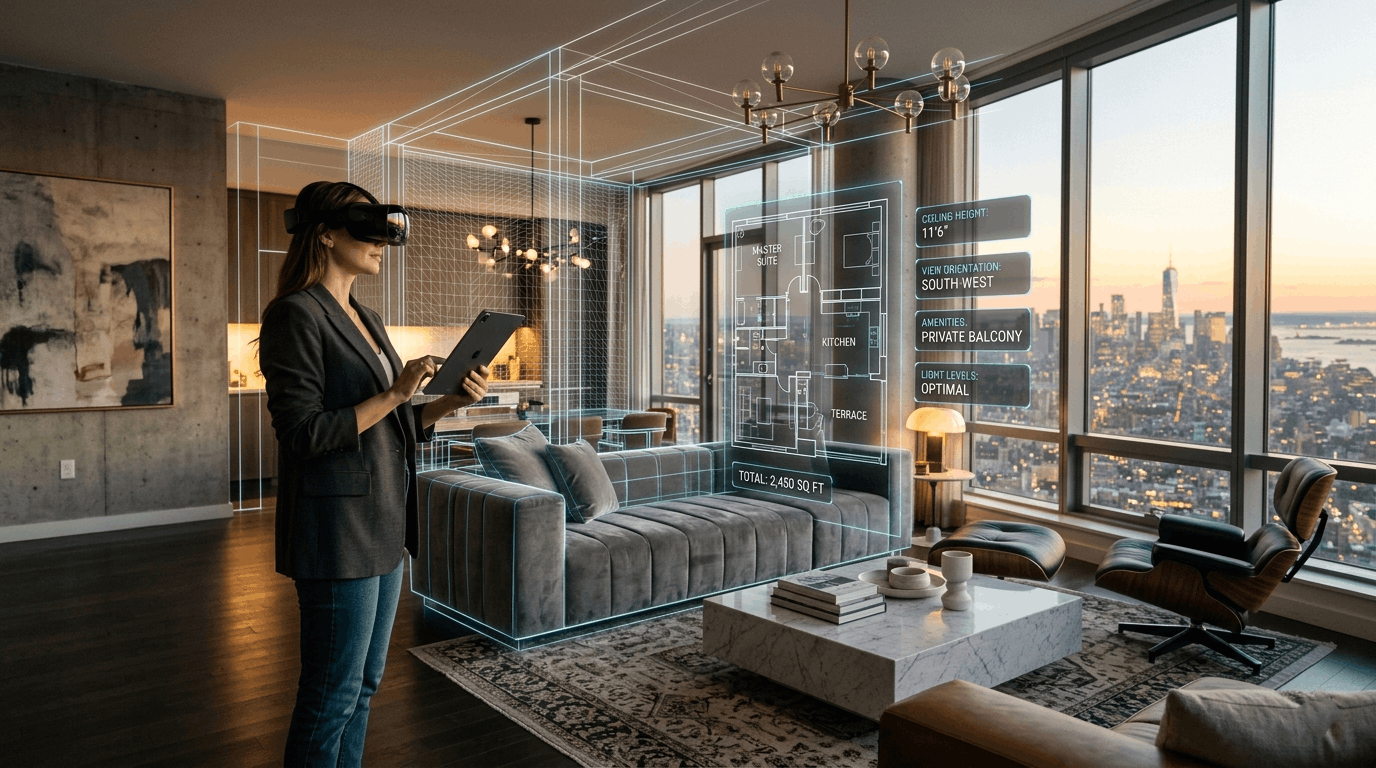
The way people search for, evaluate, and ultimately choose a home has undergone a profound shift in the last decade. At the centre of this transformation is 3D real estate technology a collection of tools and platforms that move property presentation far beyond flat photographs and floor-plan sketches. Today, this technology is reshaping what buyers, renters, and even developers expect when engaging with a property, turning a simple listing into an immersive, informative experience.
What Is 3D Real Estate Technology?
3D real estate technology refers to a suite of digital tools used to capture, render, and present physical spaces in three dimensions. It encompasses several distinct but related capabilities:
- 3D virtual tours: Interactive walkthroughs that allow users to navigate a property at their own pace, as if physically present.
- 3D floor plans: Dimensional representations of a home’s layout that convey spatial relationships more clearly than traditional 2D drawings.
- Digital twins: Highly accurate virtual replicas of a physical property, often used in large-scale development and asset management.
- Augmented and virtual reality (AR/VR) integration: Immersive environments where users can “step inside” a space using a headset or mobile device.
- 3D rendering for off-plan properties: Photorealistic visualisations of developments that do not yet exist physically.
Together, these tools form an ecosystem that bridges the gap between a property’s physical reality and the digital world where most property searches now begin.
From Static Listings to Living Spaces
Traditional real estate listings relied heavily on professionally photographed images. While high-quality photography remains important, it has an inherent limitation: it presents a curated, fixed perspective. A wide-angle lens can make a small room appear expansive; a narrow hallway might not appear at all.
3D real estate technology addresses this directly. A prospective buyer using a 3D virtual tour can explore every room and view spaces from any angle. This helps them understand the true scale and flow. This immersive experience transforms a property from a collection of images into a place that feels like home. Buyers who have already “walked” a property digitally tend to arrive at physical viewings with clearer questions and stronger intent.
The Role of 3D Technology in Elevating Perceived Value
There is a meaningful relationship between how a property is presented and how it is perceived. A well-executed 3D presentation communicates professionalism, transparency, and attention to detail.
These qualities reflect positively on both the property and those marketing it.
Spatial Clarity
One of the most significant advantages of 3D floor plans and tours is their ability to communicate spatial relationships. Buyers often struggle to imagine how furniture fits, how light moves, and how rooms connect. A three-dimensional view resolves much of this ambiguity.
When a buyer understands a space clearly, uncertainty decreases. Lower uncertainty boosts buyer confidence, leading to faster decisions and smoother negotiations in competitive markets.
Emotional Connection
Premium living experiences are defined not only by square footage or finish quality, but by how a space makes someone feel. 3D technology, particularly immersive virtual reality, can evoke an emotional response in a way that static images often cannot.
Walking through a sun-filled kitchen at dusk, or standing on a rendered balcony overlooking a city skyline, creates a mental and emotional imprint. This connection is an intangible but real part of why people choose one home over another.
Transparency and Trust
Buyers are more cautious about unseen properties, especially in global markets or when viewings are limited. 3D tours add transparency and build trust. Buyers can explore every corner digitally. This reduces the risk of disappointment when reality differs from photos.
This transparency is particularly valued in the premium segment of the market, where buyers are making significant financial and lifestyle decisions.
Applications Across the Property Lifecycle
3D real estate technology is not limited to the point of sale. It finds utility at multiple stages of a property’s lifecycle.
Pre-Construction and Development
For developers, 3D rendering and digital twins enable marketing before construction begins. Buyers can explore designs, choose finishes, and visualize homes at the concept stage.
This capability is vital in high-density urban projects, where off-plan sales are common. High-quality 3D presentations boost buyer confidence and speed up sales.
Sales and Leasing
During the active marketing phase, 3D virtual tours serve as a powerful pre-qualification tool. Buyers who have completed a thorough digital walkthrough are more likely to be genuinely interested when they request a physical viewing. This reduces the volume of unqualified visits and makes the overall sales process more efficient.
For leasing, particularly in residential and commercial markets where turnover is frequent, 3D tours allow a property to be shown continuously without requiring an agent to be present. This extends the effective hours during which a property can be marketed.
Property Management and Renovation
Digital twins are accurate 3D models of existing properties used in management. They help plan renovations, track maintenance, and document property conditions. Models can be shared with contractors, reducing site visits and improving project accuracy.
3D Technology and the Premium Market
In the luxury and premium property segment, presentation expectations are higher than in the broader market. Buyers at this level are accustomed to exceptional service and detailed information, and they are often operating across time zones and borders.
3D real estate technology meets these expectations in several ways:
Global reach without geographic limitation. A buyer in one country can conduct an immersive tour of a property in another, narrowing their shortlist before committing to travel. This has become an important capability in international luxury markets.
Customisation and personalization. Some 3D platforms let buyers customize interiors in real time, like flooring, colours, and furniture. This interactivity enhances the experience and builds a sense of ownership early.
Architectural storytelling. Premium properties often have distinctive architectural features bespoke joinery, heritage elements, or award-winning design that deserve to be understood rather than merely photographed. 3D technology allows these features to be experienced in context.
Considerations and Limitations
While 3D real estate technology offers significant advantages, it is worth noting some practical considerations.
Quality of execution matters. A poorly rendered or incomplete 3D tour can create a negative impression. The technology is only as effective as its implementation. Low-resolution scans, incomplete room coverage, or outdated representations of a property can erode rather than build trust.
It does not replace physical inspection. For most buyers, a 3D tour is a step in the journey, not the final destination. The sensory experience of visiting a property in person the acoustics, the quality of light, the feel of the space remains something that digital tools can approximate but not fully replicate.
Accessibility and user experience. Not all users are equally comfortable navigating 3D environments. Platforms that are intuitive and easy to use on both desktop and mobile devices will reach a wider audience than those that require technical literacy or specialist hardware.
The Direction of Travel
The trajectory of 3D real estate technology points toward greater integration and sophistication. Artificial intelligence is beginning to play a role in automating parts of the scan-to-tour process, reducing the time and cost of producing high-quality 3D content. Platforms are becoming more seamlessly embedded into mainstream property portals, so that a 3D tour is increasingly a standard feature rather than a premium add-on.
As spatial computing and mixed reality technologies mature, the boundary between the digital and physical experience of a property will continue to blur. What is currently an impressive differentiator is on a path to becoming a baseline expectation.
For properties positioned as premium living experiences, the question is less whether to embrace 3D real estate technology and more how to use it most thoughtfully in a way that genuinely reflects the character of the space and serves the needs of discerning buyers.
Conclusion
3D real estate technology has moved from novelty to necessity in a remarkably short period. Its ability to communicate spatial reality, build emotional connection, support transparency, and extend the reach of a property across geographies makes it a genuinely transformative tool in how properties are experienced and valued.
For those involved in developing, marketing, or managing premium properties, the technology represents not just a presentation upgrade, but a meaningful way to honour the quality of what they are offering translating the physical character of a space into a digital experience that buyers can carry with them as they make one of the most significant decisions of their lives.
