

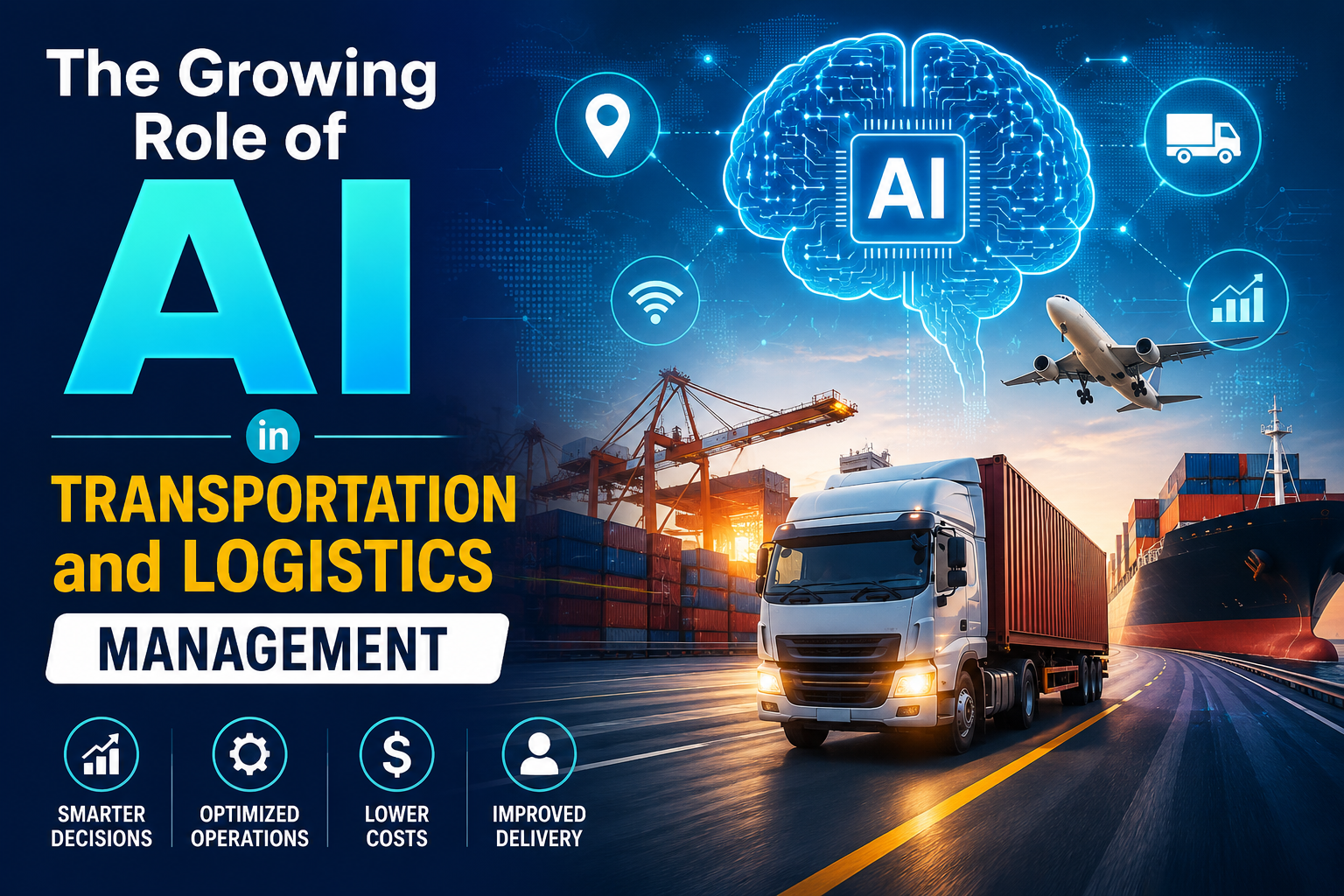
Delays, rising fuel costs, few delivery windows, and scattered data are eating into your margins every single day. You see the demand growing across the U.S., yet operations feel harder to control.
How do you scale when visibility is limited, and decisions rely on guesswork?
According to our analysis, logistics companies that rely on manual coordination see up to 28% higher operational waste. That directly impacts revenue, customer trust, and long-term contracts.
What is really causing the bottleneck?
- Disconnected fleet and warehouse data
- Reactive planning instead of predictive scheduling
- Increasing last mile delivery pressure
- Limited insight into demand fluctuations
This is where AI in logistics and transportation changes the equation. This will solve planning inefficiencies, reduce cost leakage, and give you decision clarity.
With the right AI development company, you move from constant firefighting to controlled, data driven growth.
Understanding AI in Transportation & Logistics Management
AI is transforming transportation and logistics into several ways. It optimizes routes in real-time, uses machine learning to forecast demand, and allows the use of autonomous vehicles for more efficient deliveries.
Predictive analytics along with digital transformation in transportation and logistics help minimize delays, reduce fuel costs, and improve on-time performance by analyzing traffic and weather conditions.
Also, warehouse automation with robotics and AI enhances inventory management, reduces errors, and lowers operational expenses, leading to more seamless supply chains.
Why Should Businesses Adapt AI in Transportation & Logistics Management?
U.S. businesses are facing increasing operational pressures that make traditional logistics models unsustainable without the integration of AI in transportation and logistics.
Here are some of the challenges that reflect the need for adopting generative AI in transportation and logistics: –
- Ongoing driver shortages leave fleets understaffed, resulting in costly service reductions and delivery delays.
- Unpredictable fluctuations in fuel prices erode already thin profit margins, which cannot be offset by reactive route planning.
- Port congestion and rail backlogs create cascading supply chain disruptions that manual coordination cannot effectively address.
- High turnover rates in warehouse labor disrupt inventory accuracy and hinder order fulfillment speed.
- The costs of last-mile delivery are rising, driven by increasing customer demands for free, same-day shipping.
- Manual, paper-based freight auditing often fails to catch billing errors from the thousands of daily carrier invoices processed.
- Legacy systems are unable to process real-time traffic, weather, and geospatial data, leading to potential disruptions.
- Inefficient empty backhaul rates continue to waste capacity and increase operational costs per mile.
The Role of Artificial Intelligence in Logistics and Transportation Management
Artificial Intelligence (AI) is transforming the logistics industry by enabling predictive analytics and autonomous operations. This transformation of artificial intelligence in logistics significantly improves efficiency and reduces costs throughout supply chains.
1. Demand Forecasting
With the use of digital transformation in logistics, AI analyzes historical data and market trends to predict inventory needs, helping to prevent stockouts and overstock situations.
2. Route Optimization
Machine learning algorithms calculate the most efficient delivery routes in real-time, which saves fuel and reduces transit times.
3. Warehouse Automation
AI-powered robots and autonomous guided vehicles streamline the processes of picking, packing, and sorting.
4. Predictive Maintenance
Sensors combined with AI predict equipment failures before they happen, minimizing downtime and improving operational efficiency.
5. Dynamic Pricing
AI adjusts shipping rates based on demand, capacity, and market conditions to maximize profitability.
6. Last-Mile Delivery
Advanced algorithms optimize delivery sequencing and facilitate the use of autonomous delivery vehicles and drones.
7. Risk Management
AI evaluates geopolitical, weather, and operational risks, recommending proactive contingency plans to mitigate these risks.
8. Inventory Optimization
Smart systems determine the optimal stock levels and placement across warehouses to efficiently meet customer demand.
9. Customer Experience
Chatbots and virtual assistants provide real-time shipment tracking and instant query resolution for customers.
10. Sustainability
AI helps reduce carbon footprints by optimizing loads, routes, and energy consumption across logistics networks.
Effective Use Cases of AI in Logistics and Transportation Industry
AI is transforming the logistics and transportation sector by improving efficiency, cutting costs, and allowing predictive intelligence across supply chains.
1. Predictive Fleet Maintenance
AI for supply chain management analyzes vehicle sensor data to forecast mechanical failures. This allows for proactive scheduling of repairs, helping to avoid breakdowns and minimize downtime.
2. Dynamic Route Optimization
Machine learning processes real-time traffic, weather conditions, and delivery windows to determine the fastest and most fuel-efficient routes.
3. Demand Forecasting
Algorithms assess historical sales data and external trends to predict inventory needs. This helps optimize warehouse stock levels and reduces waste.
4. Autonomous Vehicles
Self-driving trucks and drones are being utilized for long-haul freight and last-mile deliveries, addressing driver shortages and increasing capacity.
5. Warehouse Automation
AI-powered robots and computer vision systems sort, pick, and pack goods, significantly speeding up order fulfillment and reducing errors.
6. Real-Time Shipment Tracking
The combination of IoT and AI offers end-to-end visibility of shipments, predicting precise arrival times and instantly alerting managers to any delays.
7. Smart Port Operations
AI optimizes vessel scheduling, crane allocation, and container movement, which helps reduce port congestion and turnaround times.
8. Fraud Detection
In freight billing and claims, AI identifies unusual patterns in documentation and invoicing, flagging potential fraud or duplicate payments.
The Future of AI in Logistics and Transportation Industry
AI is poised to transform logistics and transportation by facilitating autonomous vehicles and drones for smooth deliveries.
Digital transformation in supply chains will optimize routes in real-time, effectively navigating traffic and weather challenges. Predictive analytics will improve demand forecasting, simplify inventory management, and reduce delays through proactive decision-making.
Additionally, warehouse automation, driven by robotics and machine learning, promises faster picking, packing, and sorting processes.
Intelligent systems will incorporate natural language processing for efficient customer service through chatbots, while supply chain visibility will enhance with end-to-end tracking.
Ultimately, AI promotes sustainable operations by minimizing fuel consumption and emissions, fostering smarter and more resilient networks.
It’s Time to Grow Your Transportation/Logistics Business With Professional AI Development Services
Growth in transportation and logistics now depends on how intelligently you operate, respond, and plan for demand. Businesses that act early gain control over operations, customer expectations, and long-term scalability.
The real opportunity lies in turning everyday data into smarter decisions, faster movement, and better service delivery. That is exactly what AI in logistics and transportation brings to your organization.
Working with the right AI development company helps you build systems that match your workflows, integrate with existing platforms, and support future expansion without disruption.
When paired with travel app development services, you also create stronger customer touchpoints, smoother booking or tracking experiences, and greater visibility across the journey.
The path forward is opportunistic for you. Adopt technology that supports growth, simplifies complexity, and positions your business to lead rather than follow.
