

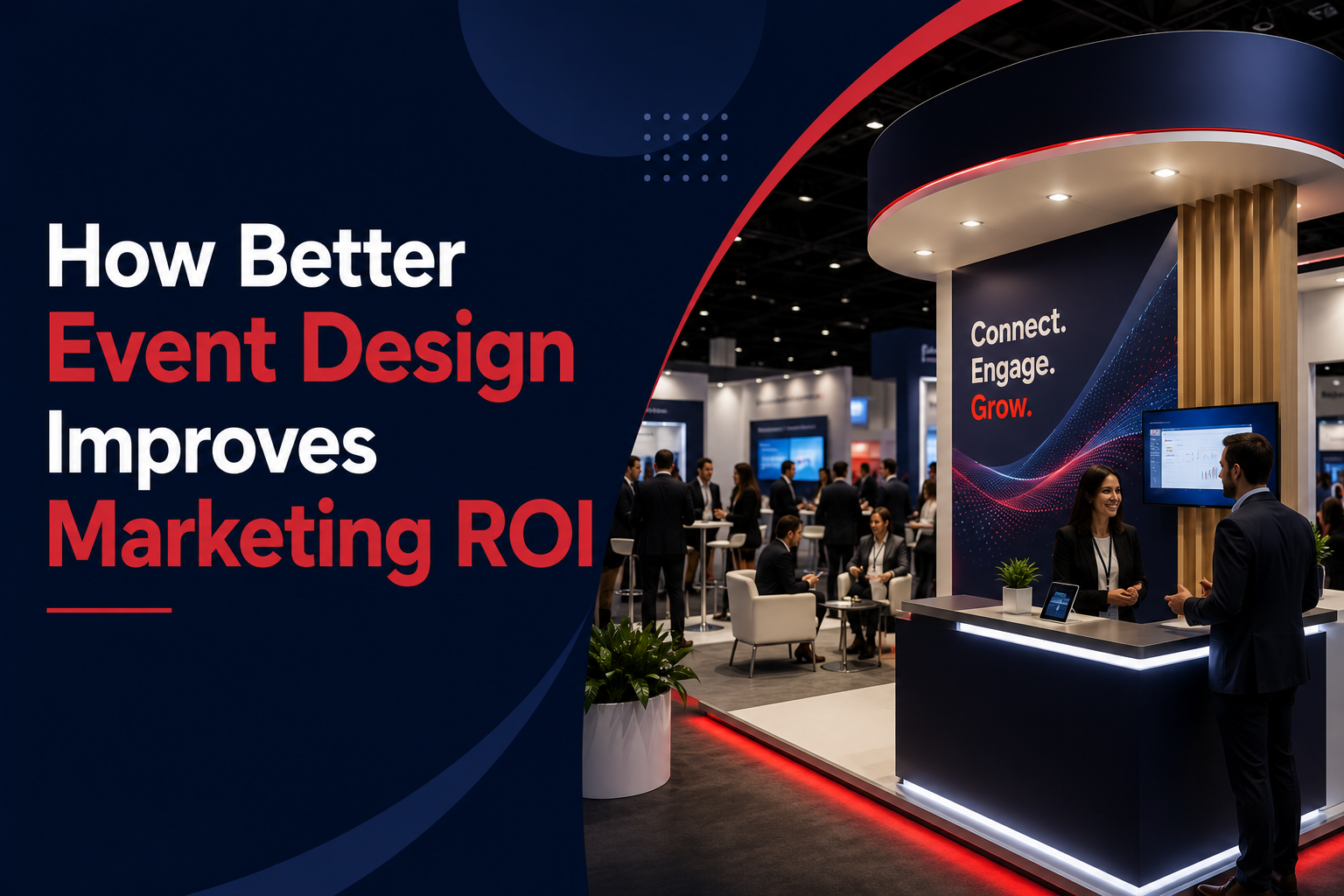
Enterprise events are expensive. Between booth space, sponsorships, travel, logistics, promotional materials, and staffing, it’s easy for a single trade show to cost tens or even hundreds of thousands of dollars. Yet when the event ends, many marketing teams evaluate success by one number alone: how many leads were collected.
That number rarely tells the full story.
A booth that attracts hundreds of visitors but starts very few meaningful conversations may produce less value than a smaller booth that engages the right audience. The real return comes from the quality of interactions, not the size of the crowd. This is where event design plays a much bigger role than many businesses realize.
Event Design Is More Than Making a Booth Look Good
When people hear the words “event design,” they often think about banners, colors, lighting, or attractive displays. Those elements matter, but good design is really about helping people move through an experience with as little friction as possible.
Imagine walking into a crowded exhibition hall. Some booths immediately communicate what the company does. Others leave visitors guessing. Some invite conversation, while others feel closed off or difficult to approach.
People naturally spend more time where they feel comfortable and understand what they’re looking at. That simple observation has a direct impact on marketing results.
Better Design Attracts the Right Visitors
Many exhibitors focus on getting as much foot traffic as possible.
More visitors sound like better results, but quantity alone rarely leads to stronger ROI. A booth packed with people who have no interest in the product creates busy staff, longer wait times, and fewer opportunities to engage qualified prospects.
Good event design helps visitors decide quickly whether the booth is relevant to them.
Clear messaging, thoughtful visuals, and a logical layout make it easier for the right audience to stop, explore, and start a conversation. That means sales teams spend more time with potential buyers instead of casual passersby.
Every Extra Minute Matters
Marketing teams often underestimate how valuable a few additional minutes can be.
If someone spends only thirty seconds at a booth, they may leave with little more than a brochure. If they stay for five minutes, they have time to watch a demonstration, ask questions, and begin building trust with the team.
Thoughtful design encourages people to slow down.
Comfortable meeting areas, interactive product displays, and an open layout create opportunities for longer conversations without making visitors feel trapped or overwhelmed.
Strong Visual Communication Reduces Sales Friction
Visitors should not have to work hard to understand what a company offers.
One of the biggest mistakes at trade shows is trying to communicate everything at once. Large paragraphs of text, multiple value propositions, and competing visuals often create confusion instead of clarity.
The most effective booths simplify the message.
A visitor should be able to understand the company’s core offering within a few seconds. Once that happens, the sales team can spend the conversation discussing business challenges instead of explaining basic information.
A Better Booth Supports the Sales Team
Event design is often viewed as a marketing responsibility, but sales teams experience its impact firsthand.
Consider two different booth layouts.
In one, the entrance is crowded with furniture, product displays block movement, and staff struggle to speak with more than one visitor at a time.
In the other, the space feels open, demonstrations are easy to access, and private meeting areas allow deeper conversations with qualified prospects.
The difference is not simply aesthetics. It changes how many meaningful discussions the team can have throughout the event.
Consistency Builds Trust
Events are rarely the first time someone encounters a brand.
Visitors may have already seen LinkedIn posts, website content, digital ads, or email campaigns before walking onto the exhibition floor.
When the booth reflects the same messaging and visual identity they have already seen online, it creates familiarity. Familiar brands often feel more credible because people don’t have to question whether they are speaking with the same company they researched earlier.
That consistency becomes especially important in long B2B buying cycles where trust develops over multiple interactions.
The Event Experience Should Continue After the Booth Visit
A successful booth doesn’t end when visitors walk away.
QR codes that lead to useful resources, digital product demonstrations, follow-up emails, and downloadable guides all help continue the conversation after the event.
This is another reason thoughtful planning matters. Every element of the booth should connect naturally with what happens next.
When visitors receive relevant follow-up based on the conversations they had at the event, marketing teams gain more value from every interaction.
Measuring ROI Goes Beyond Lead Numbers
The best event marketers look beyond badge scans.
They ask questions such as:
- How many qualified conversations took place?
- How many product demonstrations were completed?
- Which industries showed the strongest interest?
- How many follow-up meetings were scheduled?
- Which opportunities entered the sales pipeline after the event?
These metrics provide a much clearer picture of business impact than total booth traffic alone.
Why Enterprise Brands Invest in Event Design
Enterprise events involve multiple teams, significant budgets, and high expectations. Every detail influences how attendees experience the brand.
That is why many organizations work with event design services before major conferences and exhibitions. The goal is not simply to create an attractive booth. It is to build an environment that supports conversations, highlights the right messages, and helps marketing and sales teams make the most of every opportunity.
Thoughtful design also creates assets that can be reused across future events, reducing preparation time and maintaining consistency throughout the year.
Final Thoughts
Marketing ROI is rarely determined by the size of an event budget. It is shaped by how effectively that budget creates meaningful business opportunities.
A well-designed event space helps visitors understand the brand faster, encourages stronger conversations, and gives sales teams the environment they need to build relationships with qualified prospects. Those improvements may seem small on their own, but together they can have a lasting effect on event performance.
For organizations planning enterprise events, Tangence understands that thoughtful strategy, clear visual communication, and carefully planned event design services can help turn exhibitions from one-time marketing activities into experiences that continue generating value long after the event is over.
