

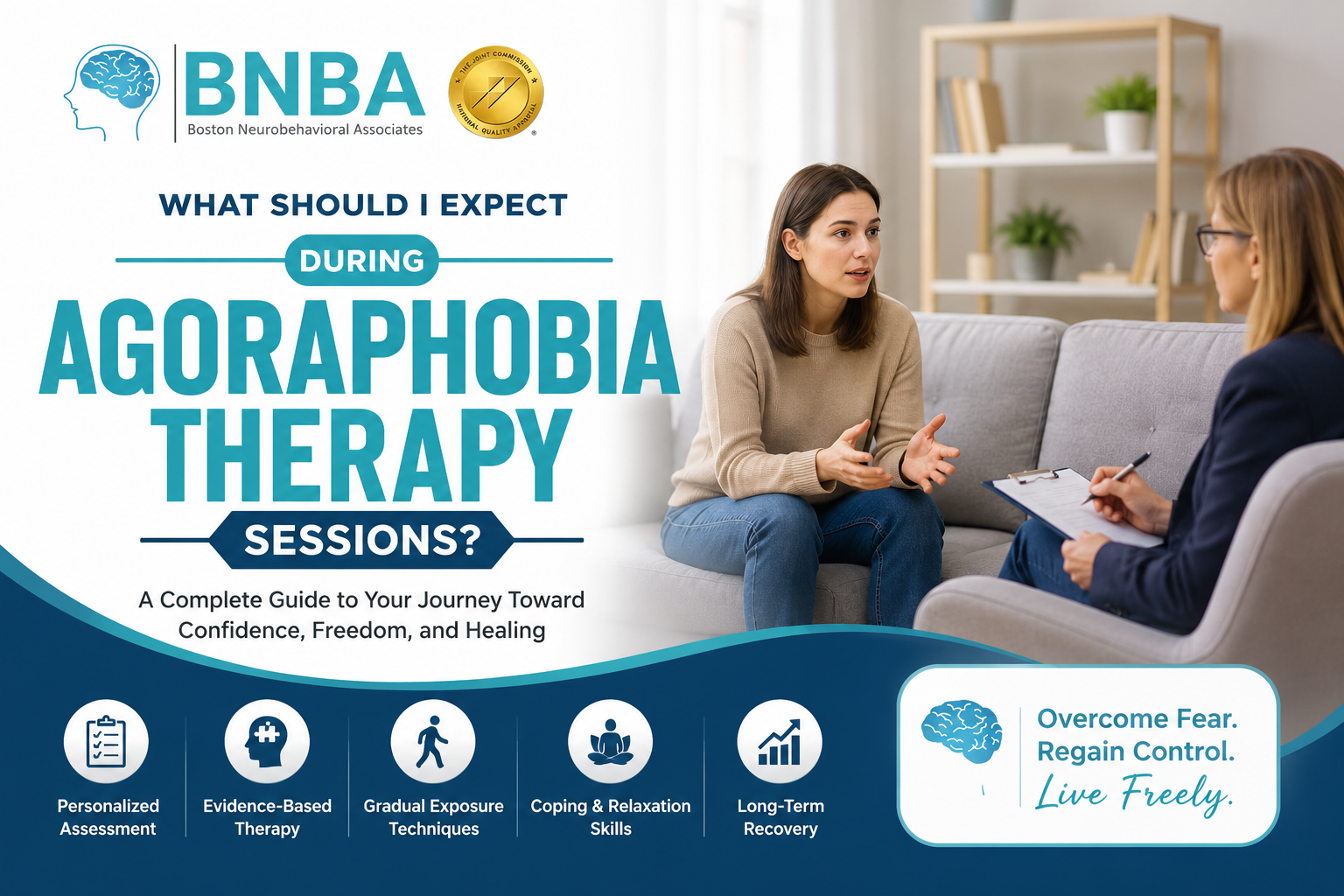
Living with agoraphobia can make everyday activities feel overwhelming. Simple tasks such as visiting a grocery store, using public transportation, attending social gatherings, or even leaving home may trigger intense anxiety. Fortunately, Agoraphobia Therapy offers effective strategies that help individuals regain confidence, manage fear, and improve their quality of life. Understanding what happens during treatment can reduce uncertainty and help you feel more comfortable about seeking professional support.
At Boston Neurobehavioral Associates, experienced mental health professionals provide evidence-based Agoraphobia Therapy designed to address the unique challenges each individual faces. If you are considering treatment, knowing what to expect during therapy sessions can help you begin your journey toward recovery with confidence.
Table of Contents
Understanding Agoraphobia
Agoraphobia is an anxiety disorder characterized by fear of situations where escape may be difficult or help might not be readily available during a panic attack or intense anxiety episode. As a result, many individuals avoid specific places, social settings, or activities.
Effective Agoraphobia Therapy focuses on identifying these fears, understanding their root causes, and developing practical coping strategies that gradually reduce anxiety over time.
Your First Agoraphobia Therapy Session
The first Agoraphobia Therapy session is typically focused on assessment and understanding your experiences. Your therapist will ask questions about:
- Your symptoms and anxiety triggers
- Situations you avoid due to fear
- Previous mental health history
- Any panic attacks or anxiety episodes
- Current challenges affecting your daily life
This initial conversation helps your therapist create a personalized treatment plan. The goal is not to judge or pressure you but to understand your experiences and establish a trusting therapeutic relationship.
Many individuals feel nervous before beginning Agoraphobia Therapy, but therapists work to create a safe, supportive, and non-judgmental environment where you can openly discuss your concerns.
Developing a Personalized Treatment Plan
No two people experience agoraphobia in exactly the same way. Therefore, effective Agoraphobia Therapy is tailored to each individual’s needs.
Your therapist may help you set realistic goals, such as:
- Leaving home more frequently
- Visiting specific locations without excessive anxiety
- Reducing panic symptoms
- Increasing social engagement
- Improving overall independence
These goals serve as milestones throughout your treatment journey and help measure progress over time.
Learning About Anxiety and Fear Responses
Education is a crucial component of Agoraphobia Therapy. Many people find relief simply by understanding how anxiety works.
Your therapist may explain:
- The body’s fight-or-flight response
- How anxiety affects thoughts and behaviors
- Why avoidance strengthens fear
- How gradual exposure can reduce anxiety
Learning about these processes can help you view your symptoms more objectively and reduce feelings of confusion or self-blame.
Cognitive Behavioral Therapy Techniques
One of the most effective approaches used in Agoraphobia Therapy is Cognitive Behavioral Therapy (CBT). CBT helps identify and challenge negative thought patterns that contribute to anxiety.
For example, if you believe, “I will panic if I leave the house,” your therapist may help you examine the evidence behind that thought and develop more balanced perspectives.
Through CBT, individuals learn to:
- Recognize anxious thinking patterns
- Replace irrational fears with realistic thoughts
- Build confidence in managing anxiety
- Develop healthier coping strategies
These skills often become valuable tools that support long-term recovery.
Gradual Exposure Exercises
Exposure therapy is often an essential part of Agoraphobia Therapy. While the idea may sound intimidating, exposure is conducted gradually and at a pace that feels manageable.
Together with your therapist, you may create a hierarchy of feared situations. This list typically begins with less challenging activities and progresses toward more difficult ones.
Examples may include:
- Standing outside your front door
- Taking a short walk around the neighborhood
- Visiting a nearby store
- Using public transportation
- Attending social events
The purpose of exposure is to help your brain learn that these situations are safer than your anxiety suggests. Over time, repeated practice can significantly reduce fear and avoidance behaviors.
Learning Relaxation and Coping Skills
During Agoraphobia Therapy, you will also learn practical techniques for managing anxiety symptoms.
Common coping strategies include:
- Deep breathing exercises
- Progressive muscle relaxation
- Mindfulness techniques
- Grounding exercises
- Stress management skills
These tools can help reduce physical symptoms of anxiety and improve your ability to handle challenging situations more effectively.
Tracking Progress Throughout Therapy
Recovery from agoraphobia is often gradual rather than immediate. Your therapist will regularly evaluate your progress and adjust your treatment plan when necessary.
During ongoing Agoraphobia Therapy, you may discuss:
- Recent successes
- Ongoing challenges
- Changes in anxiety levels
- New goals for continued improvement
Celebrating small victories is an important part of treatment. Even minor improvements can represent significant progress toward greater independence and confidence.
Building Long-Term Resilience
The ultimate goal of Agoraphobia Therapy is not simply symptom reduction but long-term resilience. As treatment progresses, many individuals develop a stronger sense of control over their anxiety and become more willing to engage in meaningful activities.
By consistently practicing the skills learned in therapy, individuals can continue building confidence long after formal treatment ends.
Conclusion
Beginning Agoraphobia Therapy can feel intimidating, but it is often one of the most important steps toward reclaiming your life. Therapy sessions are designed to provide support, education, practical coping tools, and gradual exposure techniques that help reduce fear and avoidance.
At Boston Neurobehavioral Associates, compassionate professionals understand the challenges associated with agoraphobia and provide evidence-based care tailored to each individual’s needs. With commitment, guidance, and the right treatment approach, many people successfully overcome limitations caused by anxiety and regain greater freedom in their daily lives.
FAQs
Q1: How long does Agoraphobia Therapy usually take?
A1: The duration varies depending on symptom severity and individual goals. Some people notice improvements within a few months, while others may benefit from longer-term treatment.
Q2: Is Agoraphobia Therapy effective?
A2: Yes. Research consistently shows that evidence-based approaches such as Cognitive Behavioral Therapy are highly effective in treating agoraphobia and related anxiety disorders.
Q3: Will I be forced to face my fears immediately?
A3: No. Agoraphobia Therapy uses gradual exposure techniques that are carefully planned and conducted at a pace that feels manageable for you.
Q4: Can online Agoraphobia Therapy help?
A4: Many individuals benefit from virtual therapy sessions, especially when leaving home is particularly difficult. A therapist can determine whether online treatment is appropriate for your situation.
Q5: What should I do before my first therapy session?
A5: Prepare to discuss your symptoms, fears, and personal goals. Being open and honest with your therapist can help create an effective treatment plan tailored to your needs.
