

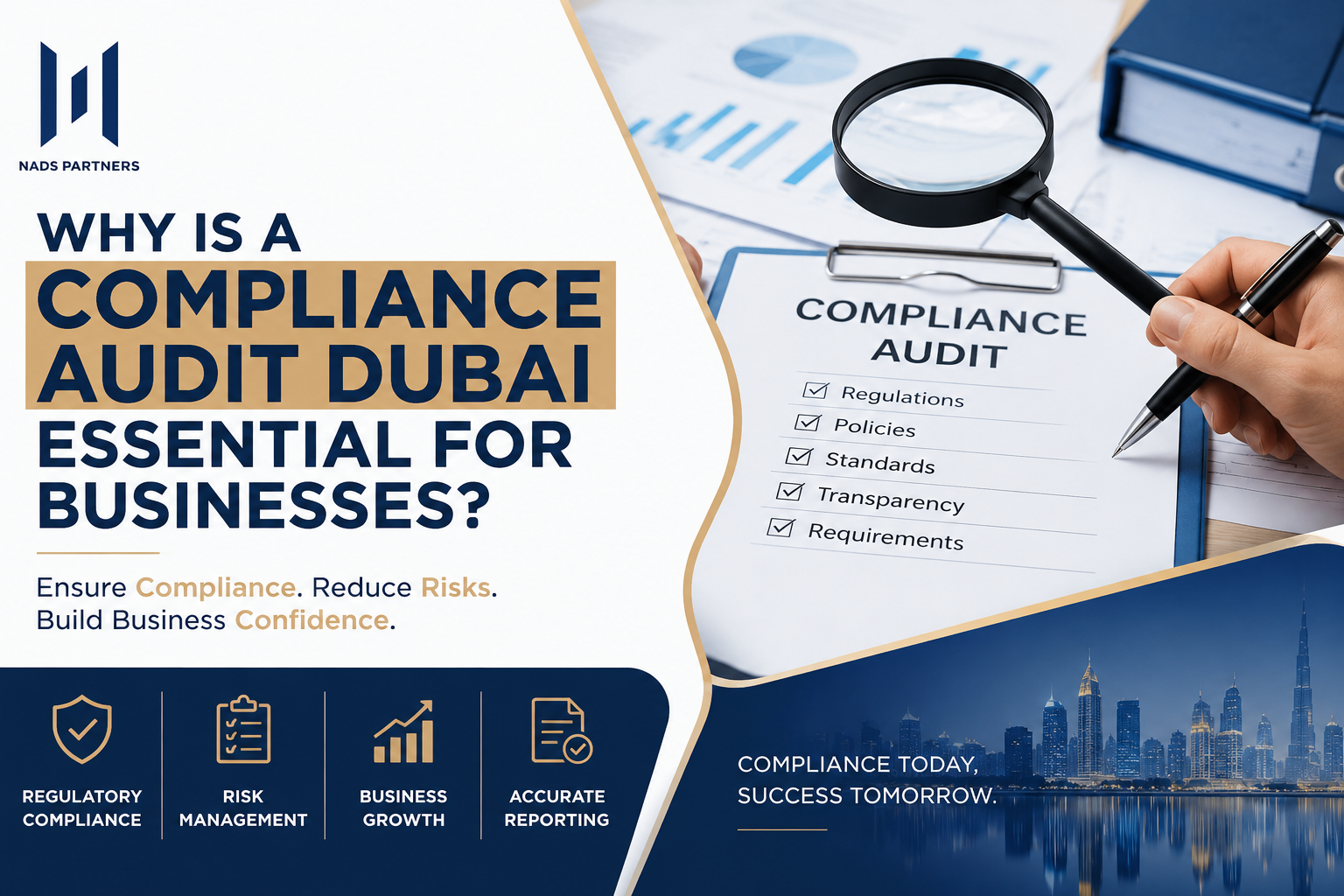
Dubai has become one of the world’s leading business hubs, attracting entrepreneurs, startups, SMEs, and multinational corporations. While the city’s business-friendly environment offers numerous opportunities, it also comes with strict regulatory requirements. Businesses operating in the UAE must comply with corporate tax regulations, VAT laws, anti-money laundering requirements, and various reporting obligations. This is why a compliance audit Dubai has become an essential part of modern business operations.
A compliance audit Dubai helps organizations evaluate whether their business practices, financial records, and operational procedures align with UAE regulations. By identifying compliance gaps early, businesses can avoid penalties, improve governance, and build long-term sustainability.
Table of Contents
What Is a Compliance Audit?
A compliance audit Dubai is a systematic review of a company’s operations, financial transactions, policies, and internal controls. The purpose is to determine whether the business complies with applicable laws and regulations.
Unlike a financial audit, which focuses on the accuracy of financial statements, a compliance audit Dubai examines whether a company is meeting its legal and regulatory obligations. These obligations may include corporate tax compliance, VAT compliance, recordkeeping requirements, and Federal Tax Authority regulations.
As regulatory frameworks continue to evolve in the UAE, conducting a compliance audit Dubai has become increasingly important for businesses of all sizes.
Why Businesses Need a Compliance Audit Dubai
The introduction of UAE Corporate Tax has transformed the compliance landscape. Businesses are now required to maintain accurate accounting records, complete tax registration, and submit tax returns according to government guidelines.
A professional compliance audit helps businesses ensure they are meeting these requirements. It identifies weaknesses in financial reporting, tax processes, and internal controls before they become serious issues.
Companies that regularly conduct a compliance audit are often better prepared for regulatory inspections and less likely to face penalties.
Corporate Tax Compliance and Audits
Corporate tax compliance is one of the primary reasons businesses seek a compliance audit . Many organizations are still adapting to the UAE’s corporate tax framework and may not fully understand their obligations.
A compliance audit reviews key tax-related areas, including:
- Corporate tax registration
- Financial record maintenance
- Tax return preparation
- Transfer pricing documentation
- Tax reporting procedures
By conducting a compliance audit Dubai, businesses can identify potential tax risks and implement corrective actions before regulatory issues arise.
Benefits for Free Zone Businesses
Free zone companies enjoy various advantages, but they must still comply with corporate tax regulations. Certain free zone entities may qualify for beneficial tax treatment if they meet specific conditions.
A compliance audit helps free zone companies assess whether they satisfy the requirements for maintaining their tax benefits. This includes reviewing financial records, business activities, and reporting obligations.
For companies seeking to maintain Qualifying Free Zone Person status, a compliance audit provides valuable insights into compliance readiness and risk management.
Reducing Financial and Regulatory Risks
One of the biggest advantages of a compliance audit Dubai is risk reduction. Regulatory penalties can be costly and may damage a company’s reputation.
A comprehensive compliance audit can identify issues such as:
- Missing documentation
- Inaccurate financial records
- Delayed tax registration
- Incorrect tax calculations
- Weak internal controls
Addressing these issues early helps businesses maintain compliance while protecting their financial position.
Common Compliance Mistakes
Many businesses unknowingly make compliance errors that could have serious consequences. A compliance audit often reveals common mistakes, including:
Poor Recordkeeping
Businesses sometimes fail to maintain sufficient documentation to support financial transactions. This can create problems during tax assessments and regulatory reviews.
Late Tax Registration
Missing registration deadlines can result in penalties and additional scrutiny from authorities.
Incorrect Income Classification
Improper classification of income may affect tax calculations and compliance status.
Lack of Internal Controls
Weak internal processes increase the risk of financial inaccuracies and compliance violations.
A professional compliance audit Dubai helps identify these issues before they become major concerns.
How Compliance Audits Support Growth
Many business owners view compliance as a legal obligation, but it can also be a strategic advantage. A compliance audit Dubai improves transparency, strengthens governance, and enhances investor confidence.
Organizations with strong compliance frameworks are often more attractive to investors, lenders, and business partners. A well-executed compliance audit Dubai demonstrates a company’s commitment to responsible business practices and regulatory excellence.
This proactive approach supports long-term growth and business stability.
Why Choose Professional Audit Services
Navigating UAE regulations can be challenging without expert guidance. Professional auditors possess the experience and technical knowledge required to conduct a thorough compliance audit Dubai.
At Nads Partners UAE, businesses receive professional support tailored to UAE compliance requirements. Experienced specialists help organizations identify compliance risks, strengthen internal controls, and maintain regulatory readiness.
Professional expertise ensures that businesses remain compliant while focusing on their core operations and growth objectives.
Conclusion
The UAE’s evolving regulatory environment requires businesses to prioritize compliance like never before. A compliance audit Dubai is no longer optional; it is a critical tool for protecting businesses from financial penalties, regulatory risks, and operational disruptions.
By conducting a regular compliance audit Dubai, organizations can improve governance, strengthen tax compliance, and build a solid foundation for sustainable growth. Businesses that invest in compliance today are better positioned to succeed in Dubai’s competitive and highly regulated marketplace.
FAQs
Q1: What is a compliance audit Dubai?
A1: A compliance audit Dubai is a review of a company’s operations, records, and procedures to ensure compliance with UAE laws, tax regulations, and reporting requirements.
Q2: Why is a compliance audit Dubai important?
A2: A compliance audit Dubai helps businesses identify regulatory risks, avoid penalties, improve governance, and maintain compliance with UAE regulations.
Q3: Who should conduct a compliance audit Dubai?
A3: Businesses of all sizes, including mainland companies, free zone entities, startups, and established organizations, should consider conducting a compliance audit Dubai regularly.
Q4: How often should a compliance audit Dubai be performed?
A4: Most businesses benefit from conducting a compliance audit Dubai annually or whenever significant regulatory changes occur.
Q5: Can a compliance audit Dubai help with corporate tax compliance?
A5: Yes. A compliance audit Dubai helps businesses review tax registration, reporting procedures, financial records, and overall corporate tax compliance requirements.
