

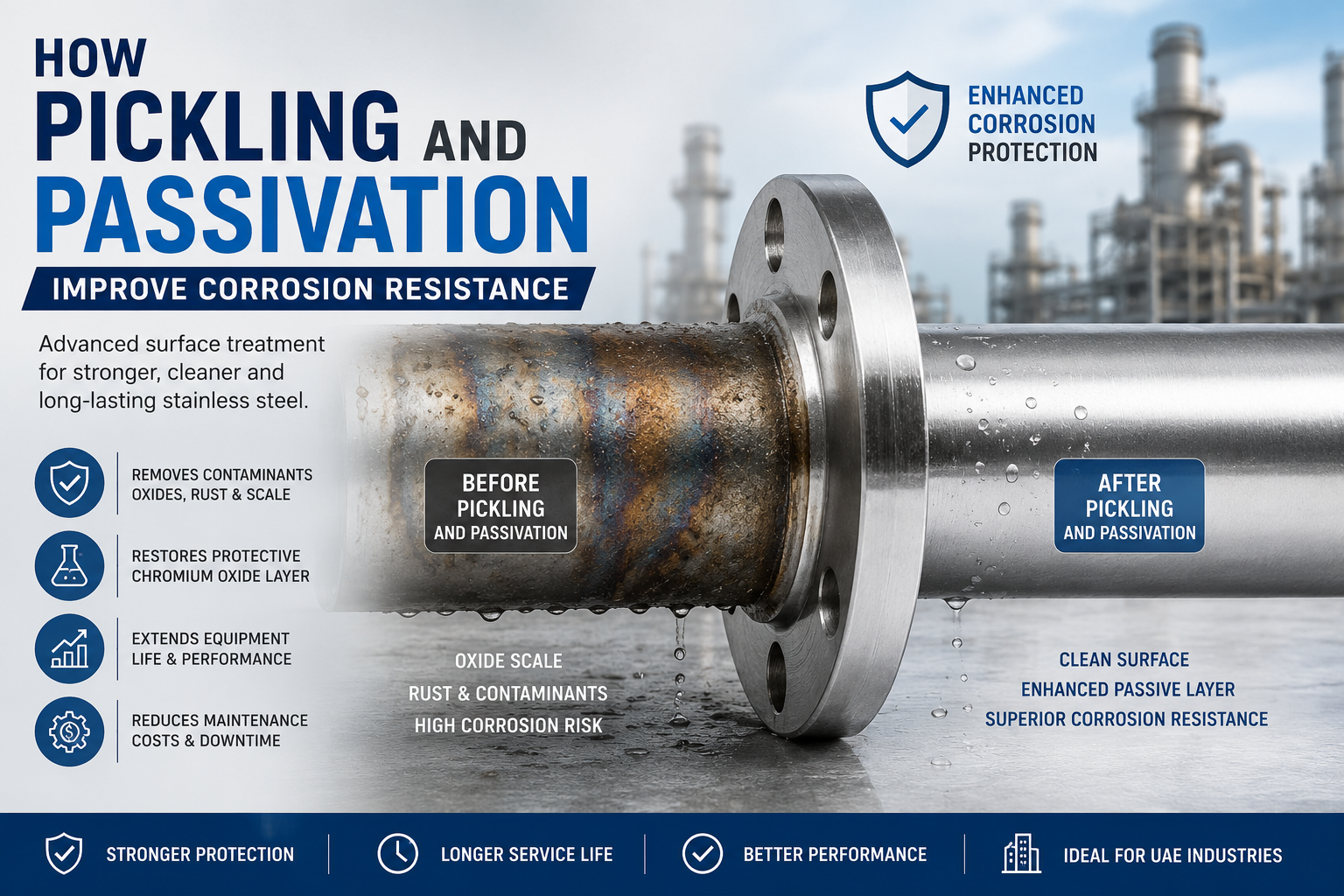
Corrosion is one of the biggest challenges faced by industries that rely on stainless steel equipment, piping, and structural components. From oil and gas facilities to food processing plants, even high-quality stainless steel can lose its corrosion resistance if its protective surface is damaged during manufacturing or fabrication. This is where pickling and passivation play a vital role.
These two essential surface treatment processes help restore the natural protective layer of stainless steel, extending its lifespan and improving performance in harsh environments. In the UAE, where high temperatures, humidity, and coastal conditions accelerate corrosion, investing in proper pickling and passivation is critical for maintaining equipment reliability.
In this article, we’ll explore how pickling and passivation work, why they matter, and how they improve corrosion resistance across various industries.
What Is Pickling and Passivation?
Although often mentioned together, pickling and passivation are two distinct processes that complement each other.
Pickling is a chemical treatment that removes contaminants such as welding scale, rust, heat tint, and surface impurities from stainless steel. It restores a clean and uniform metal surface after fabrication.
Passivation is the process of enhancing the natural chromium oxide layer that forms on stainless steel. This invisible protective film shields the metal from corrosion and prevents rust formation.
When performed together, pickling and passivation restore stainless steel to its optimal corrosion-resistant condition.
Why Corrosion Resistance Matters
Corrosion doesn’t just affect appearance—it can significantly reduce the structural integrity, efficiency, and safety of industrial equipment.
According to the National Association of Corrosion Engineers (NACE), corrosion costs the global economy approximately US$2.5 trillion annually, representing around 3–4% of global GDP. Proper corrosion prevention methods can significantly reduce maintenance costs and extend equipment life.
For UAE industries operating in marine environments, chemical plants, desalination facilities, and industrial manufacturing, corrosion protection is even more important due to exposure to salt-laden air and extreme weather conditions.
How Pickling Removes Surface Contaminants
During welding, cutting, or fabrication, stainless steel develops heat tint and oxide layers that weaken its protective chromium-rich surface.
Pickling removes:
- Welding discoloration
- Surface rust
- Iron contamination
- Oxide scale
- Fabrication residues
By eliminating these contaminants, pickling prepares the metal for effective passivation and ensures a uniform finish.
Without proper pickling, contaminants may become starting points for corrosion, leading to premature equipment failure.
How Passivation Creates a Protective Barrier
Once the surface has been cleaned through pickling, passivation strengthens the natural chromium oxide layer.
This protective film acts as a barrier between the metal and environmental elements such as
- Moisture
- Oxygen
- Salt
- Industrial chemicals
- Pollutants
The enhanced passive layer significantly improves resistance to corrosion, pitting, and staining while preserving the stainless steel’s appearance.
Unlike coatings or paints, passivation does not add any visible layer. Instead, it enhances the metal’s own natural protection.
Industries in the UAE That Benefit from Pickling and Passivation
Many UAE industries rely on stainless steel equipment that must perform reliably in demanding conditions.
Common applications include:
- Oil and gas processing plants
- Petrochemical facilities
- Food and beverage manufacturing
- Pharmaceutical production
- Water treatment plants
- Marine and offshore structures
- Architectural stainless steel installations
In these sectors, corrosion can lead to costly downtime, contamination risks, and expensive repairs. Regular pickling and passivation help prevent these issues while ensuring compliance with industry quality standards.
Key Benefits of Pickling and Passivation
Properly treated stainless steel delivers numerous long-term advantages.
Improved Corrosion Resistance
The primary benefit is enhanced protection against rust, pitting corrosion, and chemical attack, especially in coastal UAE environments.
Longer Equipment Life
Removing harmful contaminants and restoring the passive layer helps industrial assets remain operational for many years.
Reduced Maintenance Costs
Corrosion-related repairs, replacements, and downtime are significantly reduced when stainless steel is properly treated.
Better Hygiene
For food processing and pharmaceutical industries, smooth and contaminant-free surfaces improve cleanliness and reduce bacterial growth.
Enhanced Appearance
Pickling removes weld marks and discoloration, leaving stainless steel with a clean, uniform finish suitable for architectural applications.
Best Practices for Effective Results
To maximize corrosion resistance, pickling and passivation should always be performed by experienced professionals using approved chemicals and controlled procedures.
Key considerations include the following:
- Proper surface preparation before treatment
- Correct chemical concentrations
- Adequate rinsing after processing
- Safe handling of chemicals
- Final inspection and quality testing
Following international standards ensures consistent results and long-lasting protection.
Why Professional Surface Treatment Matters
Many corrosion issues originate from improper fabrication or incomplete surface cleaning rather than poor material quality.
Professional pickling and passivation services ensure every stage—from cleaning to final passivation—is completed correctly. This minimizes the risk of future corrosion and helps businesses avoid expensive maintenance and production interruptions.
For industries operating in the UAE’s demanding climate, investing in expert surface treatment is a practical and cost-effective way to protect valuable stainless steel assets.
Conclusion
Pickling and passivation are essential processes for restoring and enhancing the corrosion resistance of stainless steel. By removing contaminants and rebuilding the protective chromium oxide layer, these treatments improve durability, reduce maintenance costs, and extend equipment life.
Whether you’re operating in oil and gas, food manufacturing, pharmaceuticals, marine industries, or construction, proper pickling and passivation help ensure your stainless steel components continue performing at their best despite the UAE’s challenging environmental conditions.
