

Table of Contents
Introduction
Mast cells are a rare type of white blood cells (WBCs). These cells are an integral part of the immune system. The cells regulate immune function and respond to external stimuli. It includes response to any external injury, infections, or encounter with any type of allergens. These tiny immune cells act like the body’s first responders, helping coordinate inflammation and protect tissues when something harmful enters the system.
Mast Cells can dysfunction, or overproduction can lead to certain adverse outcomes as well. Some common outcomes include allergies, chronic inflammation, asthma, and skin conditions, all of which are linked to abnormal mast cell activity. As research in immunology continues to grow, scientists are paying closer attention to how mast cells influence both health and disease.
What Are Mast Cells?
Mast Cells are specialized immune cells that originate in the bone marrow and mature in body tissues. They are found throughout the body, especially in areas that come into contact with the outside environment, such as the skin, lungs, digestive tract, and nasal passages.
Mast cells consist of a large number of granules that stores various molecules including histamine, cytokines, and enzymes that can be rapidly released when the immune system detects a threat.
Because of their location, mast cells are often among the first immune cells to respond when the body encounters allergens, infections, or tissue damage.
Mast Cell Function in the Human Body
The main job of mast cells is to help defend the body. They play an important role in triggering inflammation, which is a natural part of the immune response. The core functions include:
- involvement in allergic reactions due to interaction with pollen, dust, pet dander, or certain foods
- Mast cells are responsible for releasing histamine and other inflammatory chemicals
- Certain responses include sneezing, itching, swelling, watery eyes, or breathing difficulties
However, mast cells do much more than cause allergies. They also help with:
- Fighting infections
- Supporting wound healing
- Regulating blood flow and blood vessel function
- Communicating with other immune cells
- Protects tissue from pathogens
Mast cells normally respond and regulate the immune system systematically. However, its prolonged activation can lead to adverse events.
How Mast Cells Become Activated
Mast cells can respond to a wide range of triggers. Allergens are the most familiar example, but they are not the only cause of activation.
Other common triggers include:
- Bacterial or viral infections
- Physical stress
- Environmental toxins exposure
- Climatic changes
- Medications reaction
- Chronic inflammation
- Emotional stress
Activation of mast cells, including histamine, tryptase, prostaglandins, and cytokines, is released. These molecules incur a quick response. However, reactions such as inflammation and discomfort can occur if released in excess.
Mast Cell Markers Used in Diagnosis & Research
Mast Cell Markers are vital indicators. Doctors use their activities to identify certain disorders. These markers are substances or proteins bound to mast cells that can be measured in laboratory tests.
Some important mast cell markers include:
Tryptase
Tryptase is one of the most widely used markers for mast cell activation. Elevated tryptase levels may suggest conditions such as mastocytosis or severe allergic reactions.
CD117 (KIT)
CD117 is a receptor found on the surface of mast cells. It helps regulate mast cell growth and survival and is commonly used in diagnostic testing.
FcεRI
This receptor helps mast cells recognize allergens by binding to immunoglobulin E (IgE). It plays a central role in allergic responses.
Researchers may also study histamine levels and inflammatory cytokines to understand mast cell behavior in different diseases.
Common Mast Cell Disorders
When the cells become overly active or build up abnormally in tissues, they can contribute to several health conditions.
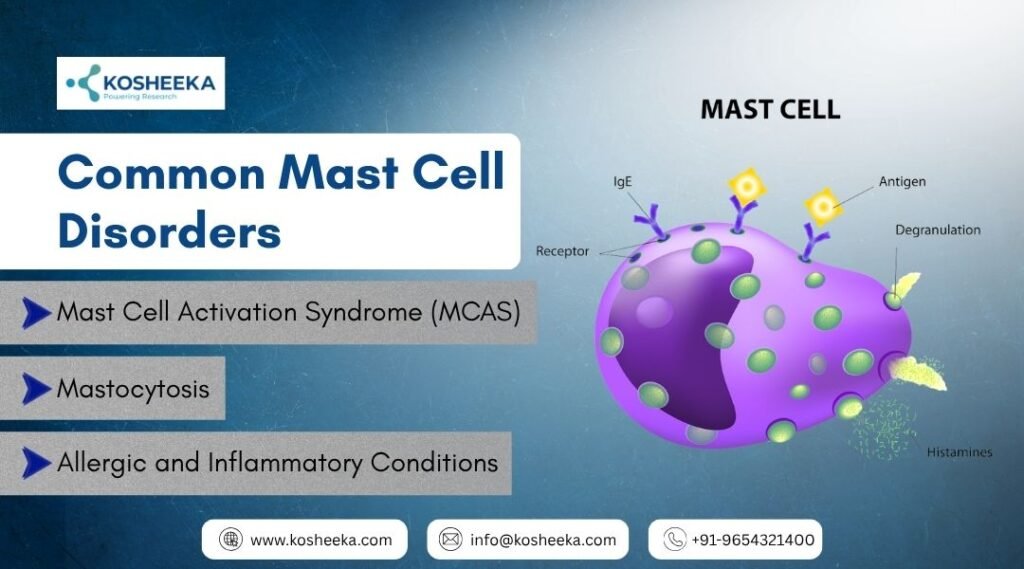
Mast Cell Activation Syndrome (MCAS)
MCAS occurs late in the release of excessive histamine or other cytokines. Although MCAS, when the cells are overactivated, leading to symptoms that can vary widely, including:
- Flushing
- Fatigue
- Brain fog
- Digestive discomfort
- Skin rashes
- Rapid heartbeat
- Breathing issues
Because symptoms overlap with many other conditions, MCAS can sometimes be difficult to diagnose.
Mastocytosis
Mastocytosis is a rare condition characterized by abnormal mast cell release in the skin or bone marrow. Symptoms may vary depending on severity, ranging from mild skin irritation to systemic complications.
Allergic and Inflammatory Conditions
The cells are involved in allergic or inflammatory conditions such as asthma, eczema, food allergies, chronic hives, and allergic rhinitis. The core interest is in better understanding the link between mast cells and autoimmune, gastrointestinal, and neurological disorders.
The Growing Interest in Research
Over the past few years, researchers have widely used for various research in immunology research. Scientists are discovering that these cells influence far more than just allergies.
Studies are currently examining the role of mast cells in chronic inflammation, gut disorders, migraine, skin diseases, neuroinflammation, etc. Common medication prescribed including antihistamines, mast cell stabilizers, anti-inflammatory medications, and lifestyle management.
Conclusion
The cells are vital components of the immune system that respond to foreign molecules. However, mast cell dysregulation potentially leads to inflammatory and immune-related conditions. Understanding Mast Cell Function enables researchers in developing various biomedical therapeutics.
