


Modern businesses are all about change and the quick replacement of old technologies by newer ones. Markets changing on an hourly basis mean companies need to understand the strengths of their employees so that the company’s objectives can be achieved. An online Business Analyst Classes provides employees with the capability of understanding how to find out what needs to be done in relation to these everyday business work objectives.
By making sure that the daily tasks fit into the overarching company requirements, when a review is done to see what equipment or technology the firm has, the time wasted working with redundant tools can be spotted. This simple review measures how current practices compare with their final goal, and it shows the items a business requires to flourish.
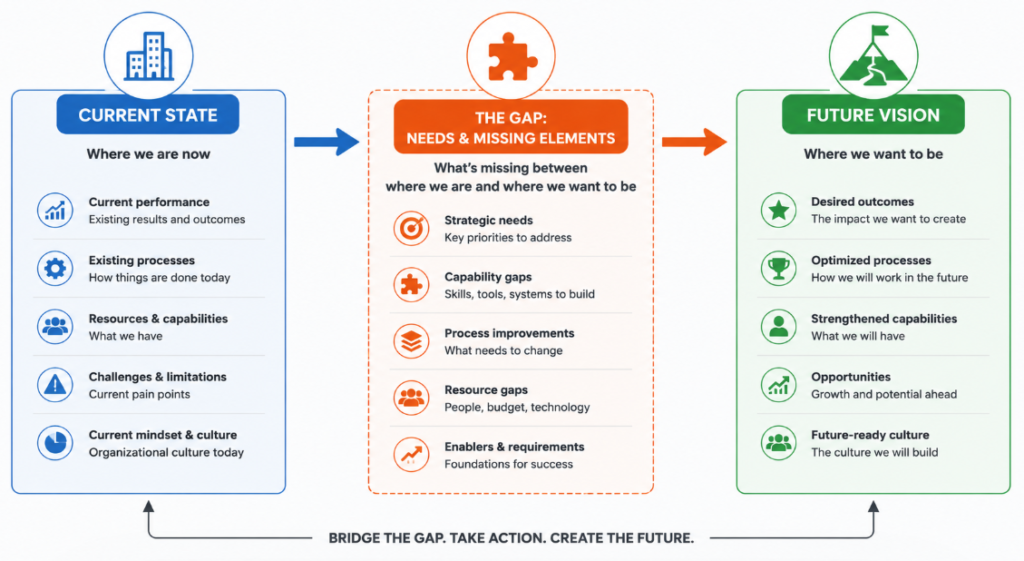
The Purpose of GAP Analysis
The ultimate aim is very simple and this is to locate the gulf that stands between now and then, highlighting where the items that the company already has are missing and where there may not be enough money, or even what business requirements need updating in terms of the way the business works.
Why Businesses Use GAP Analysis
Businesses perform a test such as this to save money and cut out mistakes before the firm actually starts to invest money in new products. It ensures the team concentrate on the priorities that really count for the company.
- Good Planning: Connects team tasks to big firm goals.
- Risk Help: Finds bad steps before official safety checks.
- Save Cash: Cuts waste by stopping the use of old software.
Types of GAP Analysis in Business
There is no one test for all types of businesses. It must be applied in a variety of situations.
| Analysis Type | Core Operational Focus | Practical Business Metric |
| Strategic | Long-term corporate direction | Market share percentage |
| Operational | Daily manufacturing and workflows | Total daily manufacturing output |
| Performance | Individual or team output levels | Employee sales target achievements |
How GAP Analysis Identifies Business Needs
This is done by the identification of gaps between where a company is and where the employees can help take it; this type of testing compares real performance with set standards, which highlights the limitations found with current software or staff training, for example.
Undertaking an online Business Analyst Certification Course equips staff with the ability to accurately identify actual drops in performance, they then present the business requirements clearly to the company as software requirements or even as part of new hiring targets, and it highlights exactly which business items the firm needs to purchase.
Role of GAP Analysis in Business Improvement
Effective performance at work requires that any constraints found to be rectified so the basic process of customer delivery is not delayed. This form of testing converts vague complaints by staff into clear and identifiable figures that top management can quickly digest.
Utilising a useful Business Analytics Online Course helps employees pinpoint where specific improvements can be made for the overall profit of the business, and this continued process ensures that the firm’s workflow does not become stagnant as consumer requirements vary, helping it adapt to change.
Key Steps in the GAP Analysis Process
- Check Current Work: Write down real performance facts today.
- Set Future Goals: Pick clear targets using market data.
- Find the Space: Measure the distance between today and tomorrow.
- Make Clear Plans: Build simple steps to fix the gaps.
Steps Involved in the GAP Analysis Process
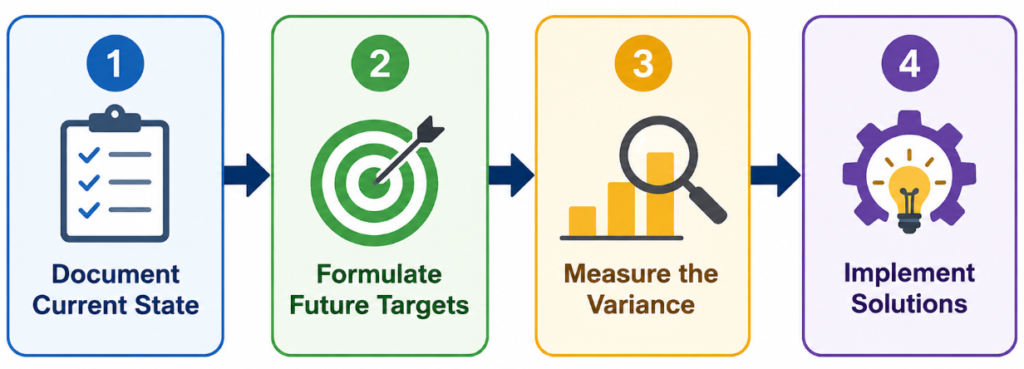
These tasks should involve having meaningful discussions with colleagues, which help clearly identify daily tasks. Each and every step in the process should have evidence to support the claims made in its requirements; leadership using hunches is not appropriate here. Leaders should aim to base recommendations on factual evidence.
Benefits of GAP Analysis for Organisations
- Higher Speed: Clears up messy tasks by cutting waste.
- Easy Guides: Gives clear roadmaps to tech teams.
- Top Priorities: Helps bosses fund the best tasks first.
Conclusion
Continuous work gap assessment is an essential business practice. Regular assessments can narrow the gap between inadequate tools and outstanding achievement, ensuring business resilience in the long run.
